

Understanding the chemical peel process day by day helps you prepare realistically, manage your skin correctly during recovery, and avoid the anxiety that often comes from not knowing what is normal. Whether you are considering a superficial, medium, or deep peel, the healing timeline differs significantly, and knowing what to expect at each stage can make the experience considerably more manageable.
Key Takeaways
- The chemical peel recovery timeline varies by peel depth: superficial peels typically resolve within three to seven days, medium-depth peels within seven to fourteen days, and deep peels may require several weeks of active healing.
- Visible peeling, redness, and tightness are expected parts of the skin renewal process, not signs that something has gone wrong.
- Strict sun avoidance and gentle skincare are essential throughout recovery to protect the newly exposed skin and support optimal results.
- Final results, including improvements in skin tone, texture, and pigmentation, often become fully visible two to four weeks after treatment, once post-inflammatory changes settle.
- A qualified practitioner should assess your skin type, concerns, and medical history before recommending a peel depth or formulation.
What Is a Chemical Peel and How Does It Work?
A chemical peel is a skin resurfacing treatment in which a chemical solution is applied to the skin to accelerate exfoliation and stimulate cellular renewal. The solution disrupts the bonds holding dead and damaged skin cells together, causing the outer layers to shed over several days. As the skin heals, newer, smoother cells replace the treated surface, which may improve the appearance of uneven skin tone, fine lines, acne scarring, sun damage, and dullness.
Chemical peels are broadly categorized by depth. Superficial peels target only the outermost layer of skin, the epidermis, using mild acids such as glycolic acid, lactic acid, mandelic acid, or low-concentration salicylic acid. Medium-depth peels penetrate into the upper dermis and commonly use trichloroacetic acid (TCA) at concentrations typically between 20% and 35%, sometimes combined with other agents. Deep peels, such as those using phenol or high-concentration TCA, reach the mid-dermis and produce the most significant resurfacing but require the longest recovery and carry greater risks. The depth of the peel determines both the potential benefit and the extent of downtime.
Before the Peel: Preparation and What Happens at Your Appointment
Preparation begins before the treatment day. Many practitioners recommend a pre-treatment skincare regimen in the weeks leading up to a peel, which may include topical retinoids, vitamin C, or hydroquinone to prime the skin, improve cell turnover, and reduce the risk of post-inflammatory hyperpigmentation, particularly in patients with darker skin tones. Antiviral medication may be prescribed before medium or deep peels for patients with a history of cold sores, as the treatment can trigger a herpes simplex reactivation.
On the day of treatment, the skin is cleansed thoroughly and degreased to allow even penetration of the chemical solution. The practitioner applies the peel solution using a brush, gauze, or cotton applicator, monitoring the skin’s response carefully. Most patients experience a tingling or burning sensation during application, which typically subsides within a few minutes. Superficial peels are often neutralized with water or a neutralizing solution after a set contact time. Medium and deep peels may self-neutralize as the frosting reaction — a whitening of the skin surface — indicates the depth of penetration. A fan or cool compress is often used to ease discomfort during the procedure.
Chemical Peel Process Day by Day: Superficial Peel Timeline
Superficial chemical peels are the most commonly performed peel type and involve the least downtime. The following timeline reflects a typical experience, though individual responses vary depending on skin sensitivity, the specific acid used, and the concentration applied.
Day 1: Immediately After Treatment
Immediately following a superficial peel, the skin typically appears pink or lightly flushed, similar to mild sunburn. There may be a sensation of warmth, tightness, or slight sensitivity. Visible peeling does not usually begin on day one. The skin may feel slightly dry or taut. Most patients can return to their normal activities the same day, though makeup is generally best avoided for at least 24 hours to allow the skin barrier to begin recovering.
Days 2 to 3: Early Dryness and Flaking
By the second or third day, the skin often begins to feel noticeably drier and may start to flake lightly, particularly around the mouth, nose, and forehead where the skin is more expressive. This early flaking is the beginning of the exfoliation process. It is important not to pick, peel, or rub the skin at this stage, as doing so can disrupt the healing process and increase the risk of scarring or pigmentation changes. A gentle, fragrance-free moisturizer applied regularly helps manage tightness and supports the skin barrier.
Days 4 to 5: Peak Peeling
For most superficial peels, days four and five represent the peak of visible shedding. Skin may peel in small flakes or sheets, and the underlying skin may appear slightly pink or sensitive. This is a normal and expected part of the chemical peel healing process. Continuing to moisturize generously and applying a broad-spectrum SPF 30 or higher sunscreen every morning is essential during this phase, as the newly exposed skin is particularly vulnerable to UV damage and post-inflammatory pigmentation.
Days 6 to 7: Resolution and Early Improvement
By the end of the first week, most of the visible peeling from a superficial peel has resolved. The skin may still appear slightly pink or feel mildly sensitive, but the surface texture is generally smoother and the complexion often looks brighter. Some patients notice an improvement in skin tone and a reduction in dullness at this stage. Full results, including any improvement in fine lines or pigmentation, typically become more apparent over the following two to four weeks as the skin continues to remodel.
Chemical Peel Process Day by Day: Medium-Depth Peel Timeline
Medium-depth peels, most commonly TCA peels, produce more significant resurfacing and require a longer recovery period. The following timeline is a general guide; individual experiences vary.
Day 1: Immediate Post-Treatment Reaction
Immediately after a medium-depth peel, the skin typically appears red and may show areas of frosting, which is the white or grey discolouration that indicates the acid has reached the intended depth. Swelling, particularly around the eyes, is common and may increase over the first 24 to 48 hours. The skin feels tight, hot, and sensitive. Most patients require time off work or social commitments during this phase. Cold compresses and prescribed post-care products help manage discomfort.
Days 2 to 3: Swelling and Darkening
Swelling often peaks around day two or three. The skin may darken to a brownish or bronzed tone as the treated tissue begins to desiccate. This darkening is a normal part of the medium-depth peel process and indicates that the skin is preparing to shed. The sensation of tightness is pronounced, and the skin may feel uncomfortable. Keeping the skin well moisturized and avoiding any manipulation of the treated area is important during this stage.
Days 4 to 6: Active Peeling Begins
Visible peeling typically begins between days four and six for medium-depth peels. The skin sheds in larger pieces than with a superficial peel, and the underlying skin may appear raw, pink, or red. This phase can be socially uncomfortable, and many patients prefer to remain at home during peak peeling. Strict adherence to the post-care regimen — including gentle cleansing, regular moisturizing, and complete sun avoidance — is critical during this period to minimize the risk of infection, scarring, and pigmentation changes.
Days 7 to 10: Continued Shedding and Sensitivity
Peeling continues through the end of the first week and into the second for many patients. The skin remains sensitive and may appear uneven in tone as different areas shed at different rates. Redness and pinkness are still present. Patients should continue to avoid direct sun exposure, strenuous exercise, and any active skincare ingredients such as retinoids or exfoliating acids until the practitioner confirms the skin has healed sufficiently.
Days 10 to 14: Surface Healing
By days ten to fourteen, the surface of the skin has generally re-epithelialized — meaning the new skin layer has formed — and most of the visible peeling has resolved. The skin may still appear pink or slightly uneven, and sensitivity can persist. Residual redness after a TCA peel can last several weeks in some patients. Makeup can usually be reintroduced once the skin surface has fully closed, though this should be confirmed with the treating practitioner. Improvements in skin texture, tone, and the appearance of pigmentation become increasingly visible over the following weeks.
Chemical Peel Process Day by Day: Deep Peel Timeline
Deep chemical peels, such as phenol peels, produce the most dramatic resurfacing and are typically reserved for significant sun damage, deep wrinkles, or pronounced pigmentation concerns. They require the most extensive recovery and carry the greatest risk profile. Deep peels are usually performed under sedation or with local anaesthesia and require careful patient selection and medical supervision.
Days 1 to 3: Significant Swelling and Crusting
The first few days after a deep peel involve pronounced swelling, redness, and the formation of a crust or scab over the treated area. The skin may weep or ooze slightly as part of the healing response. This phase requires careful wound care, typically involving prescribed ointments to keep the skin moist and protected. Patients are generally advised to rest and avoid any activity that could introduce bacteria to the healing skin.
Days 4 to 10: Active Healing Phase
During this period, the crust begins to separate and new skin gradually emerges underneath. The skin is raw, intensely pink or red, and highly sensitive. Strict sun avoidance is mandatory, as UV exposure during this phase can cause permanent pigmentation changes. Patients typically require at least one to two weeks away from work and social activities during this stage.
Weeks 2 to 4: Re-epithelialization and Persistent Redness
By the end of the second week, the skin surface has generally healed, but significant redness — known as post-peel erythema — typically persists for several weeks to months after a deep peel. This erythema gradually fades, and the improvements in skin texture and wrinkle reduction become more apparent as the redness resolves. Mineral makeup can often be used to camouflage redness once the skin has fully closed. Full results from a deep peel may not be apparent for three to six months as the skin continues to remodel collagen.
Skincare During Recovery: What to Use and What to Avoid
The products used during chemical peel recovery significantly influence the outcome. During the healing phase, the skin barrier is compromised and requires gentle, supportive care rather than active treatment.
- Use: gentle, fragrance-free cleansers; bland, occlusive or emollient moisturizers; broad-spectrum SPF 30 or higher sunscreen every morning; any specific post-care products prescribed by your practitioner.
- Avoid: retinoids, AHAs, BHAs, and other exfoliating acids until the skin has fully healed; physical scrubs or exfoliating tools; fragranced products; alcohol-based toners; picking or peeling the skin manually; prolonged sun exposure; swimming pools or saunas during the active healing phase.
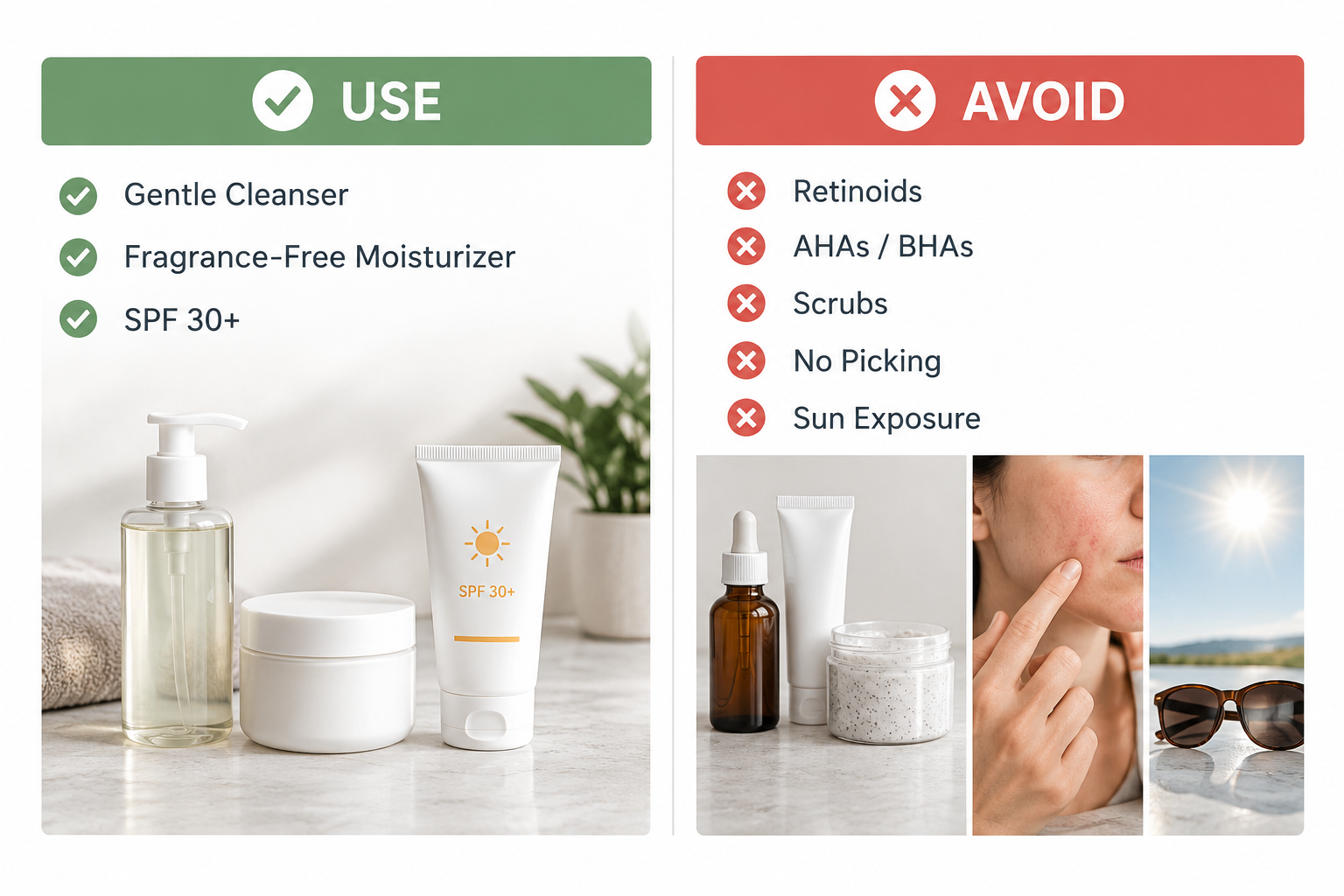
Reintroducing active skincare ingredients too early is one of the most common reasons for prolonged redness, irritation, or post-inflammatory hyperpigmentation after a chemical peel. Your practitioner should provide a clear post-care protocol tailored to the depth of peel you received.
Risks, Side Effects, and When to Seek Advice
Chemical peels carry risks that vary with peel depth, skin type, and individual factors. Common and expected side effects include redness, swelling, peeling, dryness, and temporary sensitivity. These are part of the normal healing process and typically resolve within the expected timeframe for the peel depth used.
Less common but clinically significant risks include:
- Post-inflammatory hyperpigmentation (PIH): Darkening of the skin following inflammation, more common in patients with Fitzpatrick skin types III to VI. Pre-treatment priming and strict sun protection reduce but do not eliminate this risk.
- Prolonged redness or erythema: More common after medium and deep peels, and may persist for weeks to months.
- Infection: Bacterial, viral (including herpes simplex reactivation), or fungal infection can occur if the healing skin is not properly protected. Prophylactic antiviral treatment is often recommended before medium and deep peels.
- Scarring: Uncommon but possible, particularly if the skin is manipulated during healing or if the peel penetrates more deeply than intended.
- Persistent pigmentation changes: Both hyperpigmentation and hypopigmentation (lightening) can occur, the latter being more common after deep peels.
- Systemic effects with phenol peels: Phenol is absorbed through the skin and can affect cardiac rhythm; deep phenol peels require cardiac monitoring and are performed in a controlled medical setting.
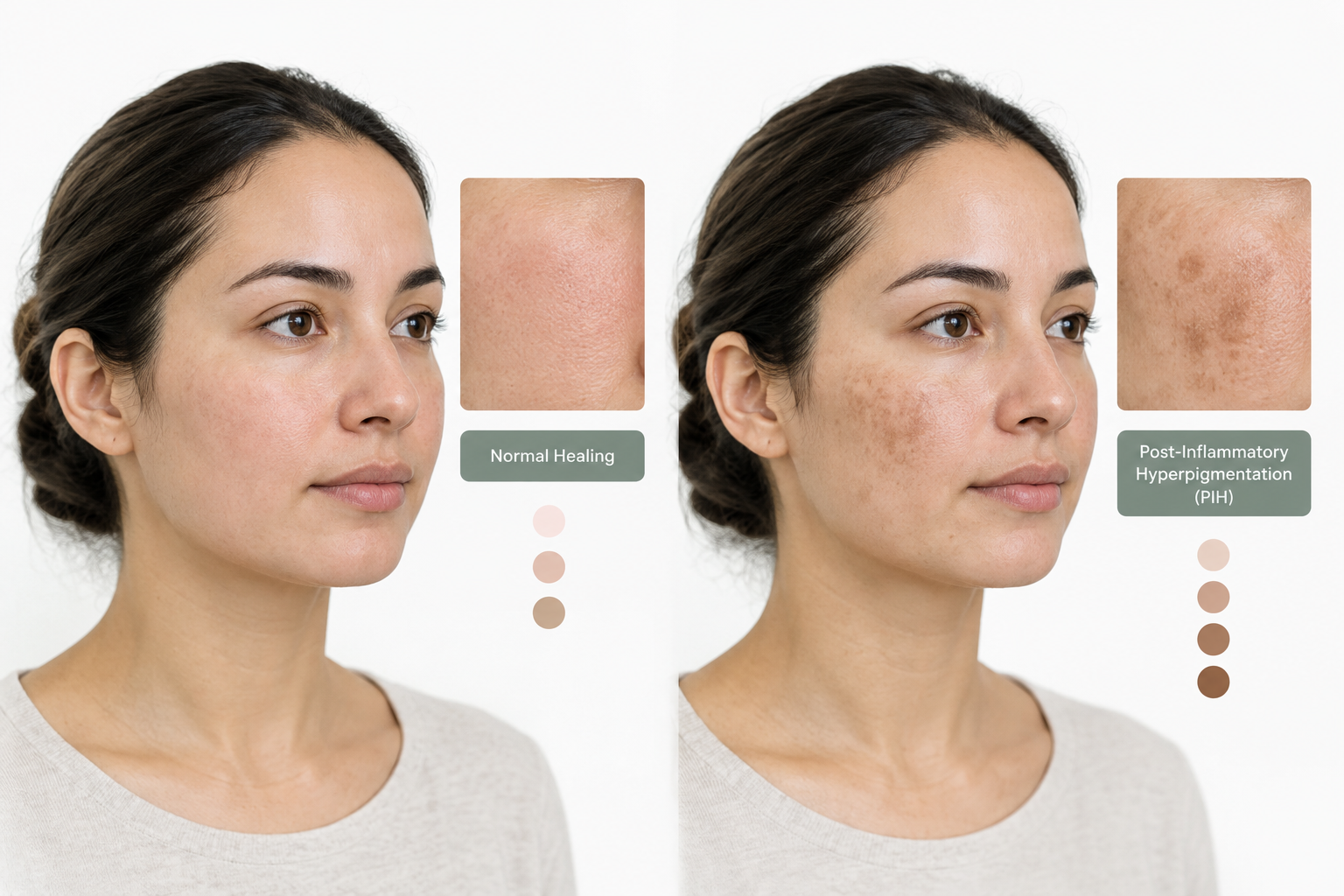
Contact your practitioner promptly if you experience signs of infection such as increasing pain, warmth, pus, or fever; if peeling has not resolved within the expected timeframe; or if you develop blistering or significant skin breakdown beyond what was anticipated.
Who May Be Suitable for a Chemical Peel
Chemical peels may be appropriate for patients seeking improvement in skin texture, uneven skin tone, mild to moderate acne scarring, sun damage, fine lines, or dullness. Suitability depends on several factors that a qualified practitioner should assess during a consultation.
Factors that may affect suitability or peel selection include:
- Skin type and Fitzpatrick phototype, as darker skin tones carry a higher risk of post-inflammatory hyperpigmentation with deeper peels
- Current skincare regimen, including use of retinoids or isotretinoin
- History of keloid scarring or abnormal wound healing
- Active skin infections, open wounds, or inflammatory skin conditions such as eczema or rosacea in the treatment area
- Pregnancy or breastfeeding, during which many chemical peel formulations are not recommended
- History of herpes simplex, which may require prophylactic antiviral treatment
- Recent use of isotretinoin (Roaccutane), as this can impair wound healing; most practitioners recommend waiting at least six to twelve months after completing a course before performing medium or deep peels
- Previous radiation therapy to the face
Alternatives to Chemical Peels
Chemical peels are one of several options for skin resurfacing and rejuvenation. Alternatives may be more appropriate depending on the patient’s skin concerns, skin type, tolerance for downtime, and treatment goals.
- Microdermabrasion: A mechanical exfoliation technique with minimal downtime, suitable for mild texture concerns but with less resurfacing depth than most chemical peels.
- Laser resurfacing: Ablative lasers such as CO2 and erbium lasers offer precise depth control and can address deeper concerns, but typically involve comparable or greater downtime than medium to deep peels. Non-ablative and fractional laser options offer reduced downtime with more gradual results.
- Microneedling: Creates controlled micro-injuries to stimulate collagen production; may be suitable for acne scarring and skin texture with less risk of pigmentation changes in darker skin tones compared to deeper peels.
- Topical retinoid therapy: A long-term approach to improving skin texture, fine lines, and pigmentation without procedural downtime, though results develop slowly over months.
- HydraFacial: A multi-step treatment combining cleansing, exfoliation, and hydration with no downtime, suitable for maintenance and mild concerns rather than significant resurfacing.
The most appropriate option depends on the specific concern being addressed, the patient’s skin type, and the degree of improvement sought. A practitioner experienced in multiple modalities is best placed to recommend the most suitable approach.
Frequently Asked Questions
How long does it take for skin to fully heal after a chemical peel?
Surface healing after a superficial peel typically takes five to seven days. Medium-depth peels generally require ten to fourteen days for the skin surface to close, though redness may persist for several weeks. Deep peels can involve several weeks of active healing, with residual redness lasting months. Full results, including collagen remodelling, continue to develop for weeks to months after the skin surface has healed.
Is it normal for skin to look worse before it looks better after a chemical peel?
Yes. During the peeling phase, the skin may appear uneven, flaky, or temporarily more blotchy than before treatment. This is a normal part of the exfoliation and renewal process. The skin typically looks noticeably better once peeling has resolved and the new skin layer has settled, usually within one to two weeks for superficial and medium peels.
Can I wear makeup during chemical peel recovery?
Makeup should generally be avoided until the skin surface has fully healed and peeling has resolved. For superficial peels, this is often possible after five to seven days. For medium and deep peels, the practitioner will advise when it is safe to reintroduce makeup. Mineral-based products are often recommended initially as they are less likely to irritate healing skin.
Why is sun protection so important after a chemical peel?
After a chemical peel, the newly exposed skin is significantly more vulnerable to UV damage. Sun exposure during the healing phase can trigger post-inflammatory hyperpigmentation, particularly in patients with darker skin tones, and can compromise the results of the treatment. Broad-spectrum SPF 30 or higher sunscreen should be applied every morning throughout recovery and for several weeks after healing is complete.
How many chemical peel sessions are typically needed?
This depends on the peel depth and the concern being treated. A single medium or deep peel may produce significant improvement for appropriate candidates. Superficial peels are often performed as a course of treatments — commonly four to six sessions spaced two to four weeks apart — to achieve cumulative improvement in skin tone and texture. Maintenance sessions may be recommended thereafter.
Can chemical peels be used on all skin tones?
Chemical peels can be used across a range of skin tones, but peel selection and depth must be carefully matched to the patient’s Fitzpatrick skin type. Patients with darker skin tones face a higher risk of post-inflammatory hyperpigmentation with medium and deep peels. Superficial peels using agents such as mandelic acid or low-concentration salicylic acid are often considered more suitable for darker skin tones, and pre-treatment priming is particularly important. A practitioner experienced in treating diverse skin tones should assess suitability individually.
Planning Your Chemical Peel Recovery Realistically
Knowing the chemical peel process day by day allows you to plan your schedule, set realistic expectations, and follow your post-care regimen with confidence. The most important factors in achieving a good outcome are choosing the right peel depth for your skin concerns and skin type, following the post-care instructions provided by your practitioner, protecting the healing skin from sun exposure, and resisting the urge to interfere with the peeling process.
Results from chemical peels can be meaningful for the right candidate, but they are not guaranteed, and the degree of improvement varies depending on the concern being treated, the peel depth, and individual skin biology. A thorough consultation with a qualified practitioner — one who can assess your skin type, medical history, and treatment goals — is the essential first step before committing to any peel. If you are considering a chemical peel, use that consultation to ask about the specific peel being recommended, the expected recovery timeline for your skin type, and what realistic improvement you might expect for your particular concern.