

Chemical peels are one of the most established skin resurfacing treatments available, used to address concerns ranging from uneven skin tone and acne scarring to fine lines and sun damage. Understanding what actually happens to the skin before, during, and after a chemical peel — and what realistic results look like — helps prospective patients make informed decisions before booking a consultation.
Key Takeaways
- Chemical peels vary significantly in depth — superficial, medium, and deep — and the type used determines both the results achievable and the recovery time required.
- Visible improvements in skin texture, tone, and clarity are commonly reported, but results depend on skin type, concern severity, and the number of treatments.
- Downtime ranges from minimal peeling with superficial peels to up to two weeks of significant skin shedding with deeper treatments.
- Multiple sessions are often needed for superficial peels to achieve cumulative improvement; deeper peels may produce more dramatic change from a single treatment.
- A thorough consultation with a qualified practitioner is essential to determine which peel depth and formulation may be appropriate for your skin.
What Is a Chemical Peel?
A chemical peel is a skin resurfacing procedure in which a chemical solution — typically an acid or combination of acids — is applied to the skin to accelerate cell turnover and remove damaged outer layers. As the treated skin sheds, newer skin beneath is revealed, which may appear smoother, more evenly pigmented, and with improved texture. Chemical peels have been used in dermatology and aesthetic medicine for decades and remain a well-studied option for a range of skin concerns.
The three main categories of chemical peels are classified by how deeply they penetrate the skin. Superficial peels affect only the outermost layer of skin (the epidermis) and typically use low concentrations of alpha-hydroxy acids (AHAs) such as glycolic acid or lactic acid, or beta-hydroxy acids (BHAs) such as salicylic acid. Medium-depth peels reach into the upper dermis and commonly use trichloroacetic acid (TCA) at moderate concentrations. Deep peels, such as those using phenol or high-concentration TCA, penetrate more deeply into the dermis and are associated with more significant results alongside greater downtime and risk. The depth of peel selected depends on the skin concern being addressed, the patient’s skin type, and their tolerance for recovery time.
What Skin Concerns Can Chemical Peels Address?
Chemical peels may be used to improve a range of skin concerns, though the degree of improvement varies depending on peel depth, formulation, and individual skin characteristics. Commonly treated concerns include:
- Uneven skin tone and hyperpigmentation, including post-inflammatory hyperpigmentation (PIH) and melasma, though melasma in particular requires careful management as some peels can worsen it if not selected appropriately.
- Acne and acne scarring — superficial peels with salicylic acid are frequently used for active acne, while medium-depth peels may help with superficial acne scars.
- Fine lines and mild skin laxity, particularly around the mouth and under the eyes, where medium and deeper peels may stimulate collagen remodelling.
- Sun damage and age spots, where accumulated photodamage in the epidermis and upper dermis may respond well to medium-depth resurfacing.
- Rough or dull skin texture, where regular superficial peels can improve overall skin clarity and radiance over time.
- Enlarged pores, which may appear reduced following treatment as skin texture improves.
It is important to note that chemical peels are not effective for all skin concerns. Deep structural scarring, significant skin laxity, and vascular concerns such as rosacea-related redness typically require different treatment approaches. A qualified practitioner can assess whether a chemical peel is appropriate for a specific concern or whether an alternative treatment may be more suitable.
Before a Chemical Peel: Preparation and What to Expect
Preparation before a chemical peel is an important part of achieving good results and minimising the risk of complications. Most practitioners will recommend a pre-treatment skincare regimen in the weeks leading up to the procedure. This commonly includes the use of a retinoid or retinol to prime the skin and encourage more even acid penetration, as well as a broad-spectrum sunscreen to protect the skin and reduce the risk of post-treatment pigmentation changes.
Patients with a history of cold sores (herpes simplex virus) may be prescribed antiviral medication before medium or deep peels, as the procedure can trigger an outbreak. Certain medications and skincare ingredients — including isotretinoin (Roaccutane), which should typically be discontinued for a period before treatment — may affect suitability or timing. A thorough consultation should include a review of medical history, current medications, and any previous skin treatments.
On the day of the appointment, the skin is cleansed and degreased before the chemical solution is applied. Patients are advised to arrive without makeup and to avoid applying active skincare ingredients such as retinoids or exfoliating acids in the days immediately before treatment. Sun exposure should be avoided in the lead-up to the procedure, as tanned or sun-damaged skin may respond unpredictably to chemical exfoliation.
During the Treatment: What the Appointment Involves
The experience during a chemical peel varies depending on the type and depth of peel being performed. For superficial peels, the procedure is generally quick — often completed within 30 to 45 minutes — and involves minimal discomfort. Patients typically notice a mild tingling or stinging sensation as the acid solution is applied, which usually subsides within a few minutes. A neutralising solution may then be applied, or the peel may self-neutralise depending on the formulation used.
Medium-depth peels produce a more noticeable sensation, often described as a burning or stinging feeling that may last several minutes. A handheld fan is sometimes used to help manage discomfort during application. The skin may appear frosted or white immediately after a TCA peel, which is a normal response indicating the acid has reached the intended depth. This frosting resolves as the skin begins its healing process.
Deep phenol peels are more involved procedures that may require sedation or local anaesthesia and are typically performed in a clinical or medical setting with appropriate monitoring. These are less commonly performed than superficial or medium peels and carry a more significant risk profile, which should be discussed in detail with a qualified medical professional before proceeding.
Chemical Peel Before and After: What the Skin Goes Through
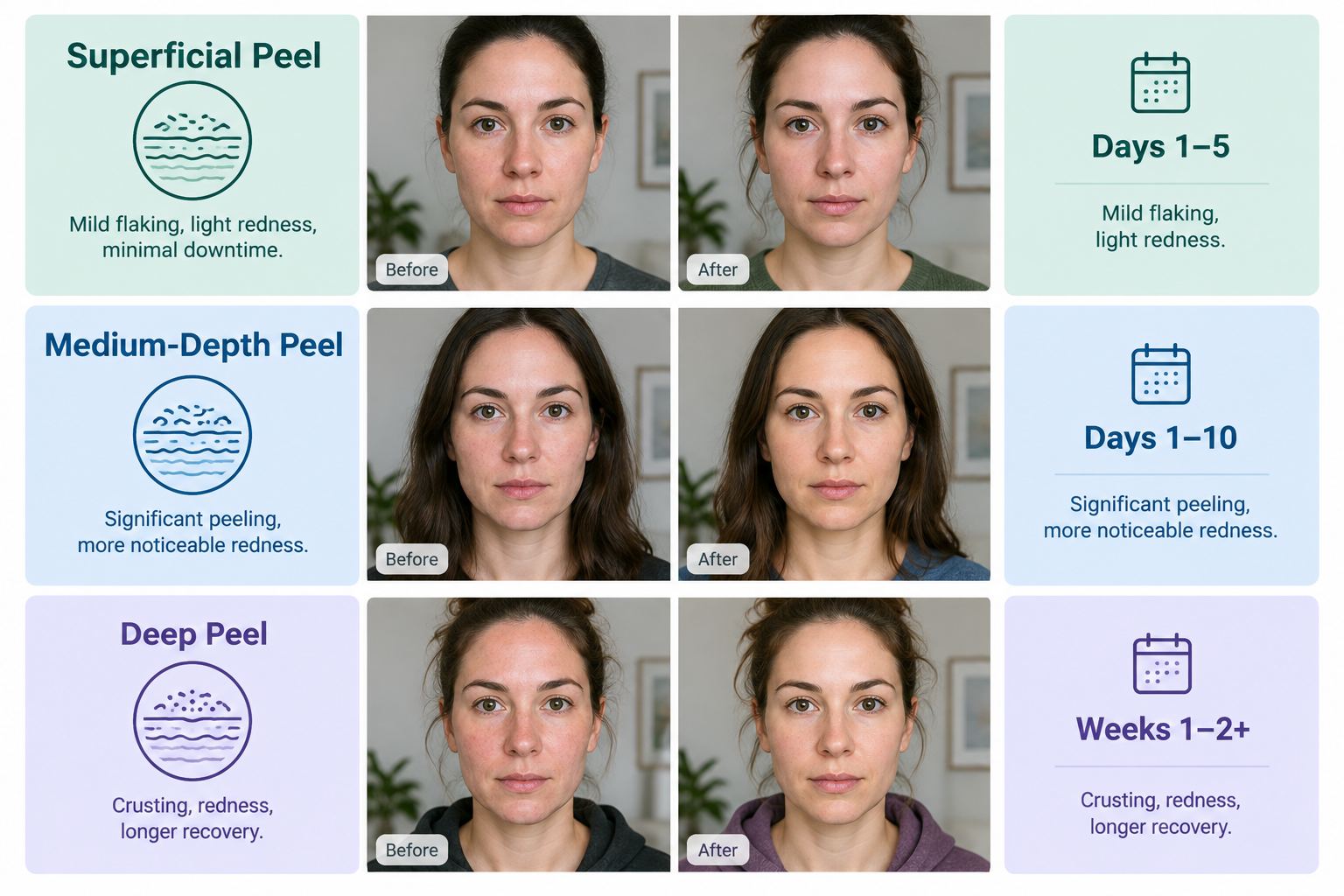
Understanding the skin’s journey from immediately after treatment through to the final result helps set realistic expectations. The timeline and intensity of changes depend on the depth of peel performed.
Superficial Peel Recovery Timeline
After a superficial chemical peel, the skin may appear slightly pink or flushed for a few hours. Over the following two to five days, mild flaking or peeling is common, though it is often subtle enough that it may not be immediately obvious to others. The skin may feel tight or dry during this period. Most patients can return to normal activities immediately or the following day, though sun protection is essential. Visible improvements in skin brightness and texture may be noticeable within a week, with cumulative benefits building over a course of treatments typically spaced two to four weeks apart.
Medium-Depth Peel Recovery Timeline
Medium-depth peels, such as those using TCA, involve a more pronounced recovery. In the first 24 to 48 hours, the skin may appear red, swollen, and tight. Between days three and seven, more significant peeling and shedding occurs as the treated skin separates from the new skin forming beneath. This peeling should not be manually removed, as doing so can increase the risk of scarring or infection. By the end of the first week, most of the visible peeling has usually resolved, though the skin may remain pink and sensitive for several additional weeks. Makeup can typically be applied once the skin has fully re-epithelialised, usually around seven to ten days post-treatment. Results from a medium-depth peel may continue to improve over several months as collagen remodelling progresses.
Deep Peel Recovery Timeline
Deep chemical peels involve the most significant recovery period, often lasting two weeks or more. Substantial swelling, crusting, and oozing are expected in the first several days, and the skin requires careful wound care during this time. The new skin that emerges is initially very pink or red, and this redness may persist for weeks to months. Sun avoidance is critical during recovery and for an extended period afterwards. Deep peels are generally reserved for significant photodamage, deep wrinkles, or specific scarring concerns, and are not appropriate for all skin types — in particular, they carry a higher risk of permanent pigmentation changes in darker skin tones.
Realistic Results: What Chemical Peels Can and Cannot Achieve
Chemical peel results are often meaningful but should be understood within realistic parameters. Superficial peels can produce a noticeable improvement in skin radiance, clarity, and texture, and with regular treatments may help manage mild hyperpigmentation and acne. However, they are unlikely to produce significant improvement in deep wrinkles, pronounced scarring, or substantial skin laxity.
Medium-depth peels can deliver more visible improvements in fine lines, moderate sun damage, and superficial pigmentation concerns. Clinical evidence supports their use for photoaged skin, and improvements in skin texture and tone are commonly observed. However, results vary between individuals, and the degree of improvement depends on the severity of the concern being treated, the patient’s skin type, and how well pre- and post-treatment care instructions are followed.
Deep peels can produce the most dramatic improvements in wrinkles and significant photodamage, but they carry the greatest risk and the longest recovery. They are not suitable for all patients and require careful patient selection by an experienced practitioner. It is also worth noting that chemical peels do not stop the ageing process — maintenance treatments or complementary procedures may be needed over time to sustain results.
Individual results vary considerably. Factors such as Fitzpatrick skin type, the specific concern being treated, baseline skin health, adherence to pre- and post-treatment protocols, and sun exposure habits all influence outcomes. Before-and-after photographs can be a useful reference point during consultation, but they should be interpreted with the understanding that lighting, photography conditions, and individual variation mean that one patient’s results are not a reliable predictor of another’s.
Risks and Side Effects
Chemical peels carry a range of potential side effects and risks that should be discussed openly before treatment. Common and expected effects include redness, peeling, dryness, and temporary sensitivity, which are part of the normal healing process. Less common but clinically significant risks include:
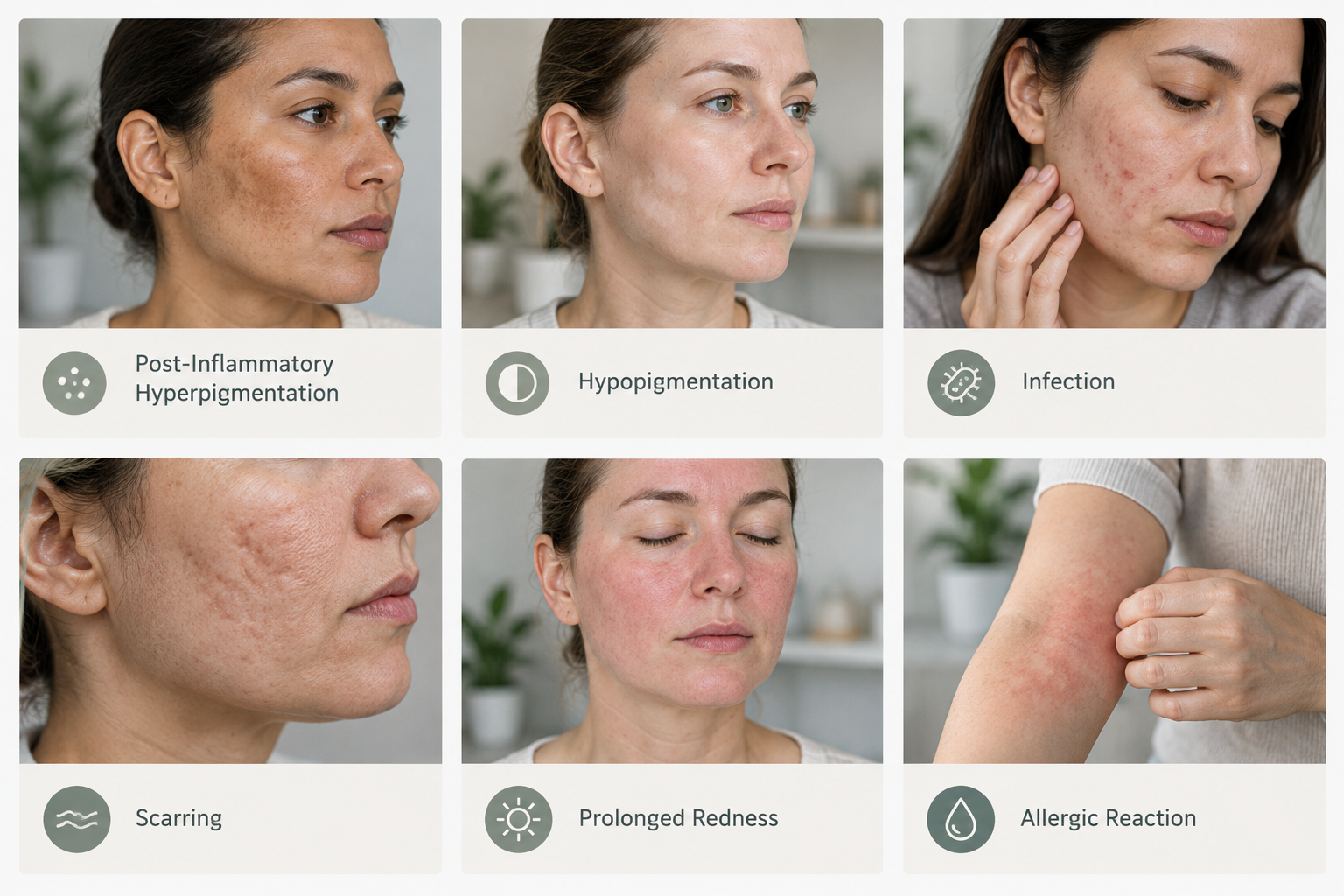
- Post-inflammatory hyperpigmentation (PIH): Darkening of the skin following treatment, which is more common in patients with darker skin tones (Fitzpatrick types IV–VI) and can be worsened by sun exposure during recovery.
- Hypopigmentation: Lightening of the skin, which is more commonly associated with deep peels and may be permanent in some cases.
- Infection: Bacterial, viral, or fungal infection can occur if the skin barrier is compromised during recovery. Antiviral prophylaxis is typically recommended before medium and deep peels in patients with a history of herpes simplex.
- Scarring: Although uncommon when peels are performed appropriately, scarring is a recognised risk, particularly with deeper treatments or if post-treatment instructions are not followed.
- Prolonged redness: Some patients experience persistent erythema beyond the expected recovery period, particularly after medium or deep peels.
- Allergic reaction: Sensitivity to specific acid formulations is possible, though uncommon.
The risk profile increases with peel depth. Superficial peels performed by a trained practitioner on appropriately selected patients carry a relatively low risk of serious complications. Medium and deep peels require more careful patient selection, preparation, and aftercare to minimise adverse outcomes.
Who May Be Suitable for a Chemical Peel?
Chemical peels may be suitable for adults with a range of skin concerns including mild to moderate photodamage, uneven skin tone, acne-prone skin, or fine lines. Patients with lighter skin tones (Fitzpatrick types I–III) are generally considered lower risk for pigmentation-related complications, though peels can be performed on darker skin types with appropriate formulation selection and careful technique.
Patients who may not be suitable for certain chemical peels include those who:
- Are pregnant or breastfeeding
- Have used isotretinoin recently (the recommended interval before treatment varies and should be discussed with a practitioner)
- Have active skin infections, open wounds, or inflammatory skin conditions in the treatment area
- Have a history of keloid scarring
- Have recently had other resurfacing procedures in the same area
- Are unable to commit to sun avoidance and appropriate aftercare during recovery
Suitability is always determined on an individual basis following a thorough clinical assessment. A practitioner should review medical history, current medications, skin type, and treatment goals before recommending a specific peel type or depth.
Alternatives to Chemical Peels
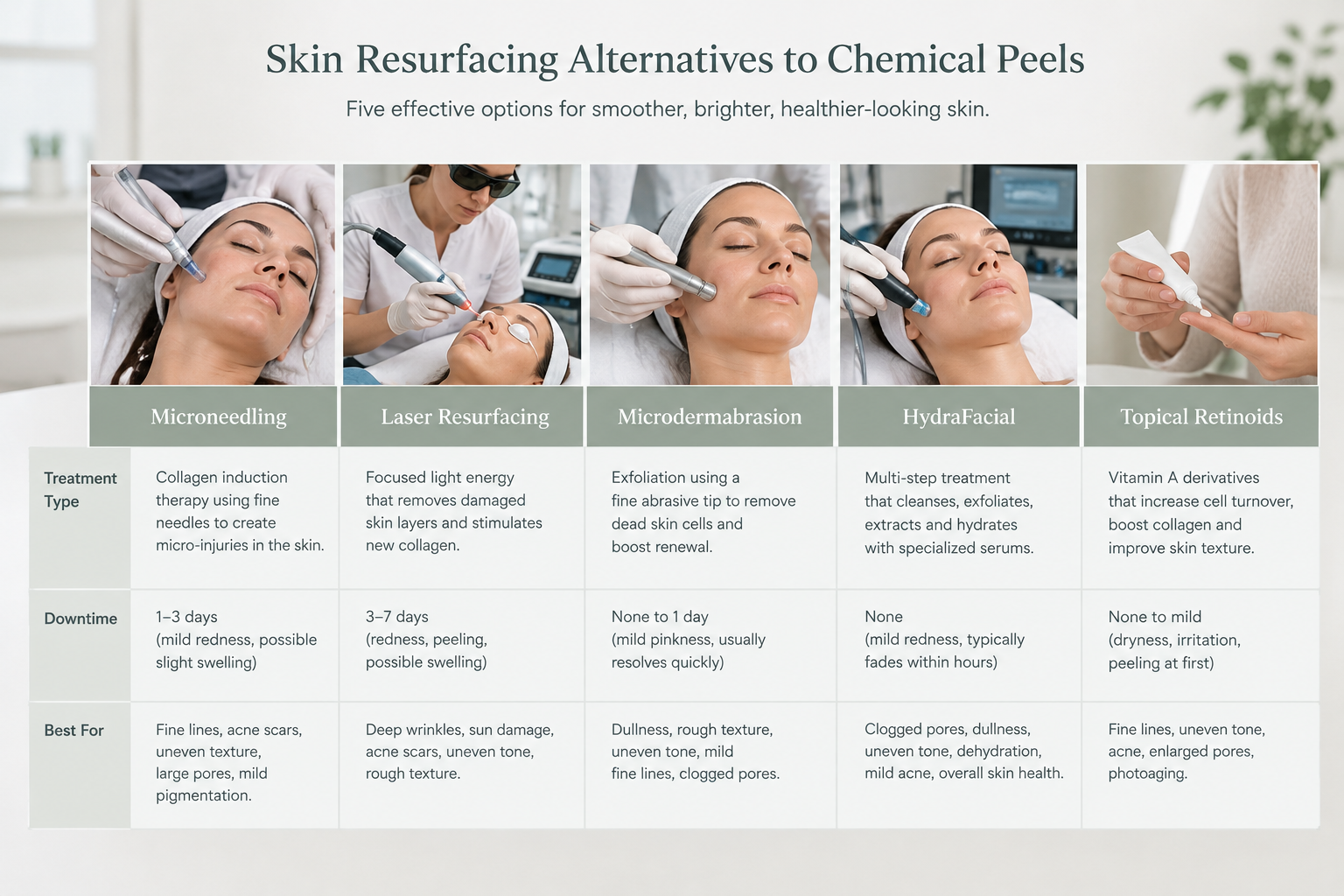
For patients who are not suitable candidates for chemical peels, or who are seeking different outcomes, several alternative skin resurfacing and rejuvenation treatments may be worth discussing with a practitioner. These include:
- Microneedling: Uses fine needles to create controlled micro-injuries in the skin, stimulating collagen production. May be suitable for a broader range of skin tones than some chemical peels and can address texture, scarring, and fine lines.
- Laser resurfacing: Ablative lasers such as CO2 or erbium lasers can achieve results comparable to medium or deep peels for wrinkles and photodamage, while non-ablative and fractional laser options offer reduced downtime. Laser treatments also require careful skin type assessment.
- Microdermabrasion: A mechanical exfoliation technique that removes the outermost skin layer. Generally less effective than chemical peels for significant concerns but involves minimal downtime.
- HydraFacial: A multi-step treatment combining cleansing, exfoliation, extraction, and hydration. Suitable for most skin types with no downtime, though results are generally less pronounced than those achieved with chemical peels for specific concerns.
- Topical retinoids and prescription skincare: For patients seeking gradual improvement without procedural downtime, a structured skincare regimen including retinoids, vitamin C, and broad-spectrum SPF may offer meaningful long-term benefits.
The most appropriate treatment depends on the specific concern, skin type, tolerance for downtime, and individual goals. A qualified practitioner can help identify which approach — or combination of approaches — may be most suitable.
Frequently Asked Questions
How many chemical peel sessions are typically needed?
The number of sessions depends on the type of peel and the concern being treated. Superficial peels are often performed as a course of four to six treatments spaced two to four weeks apart, with maintenance sessions thereafter. Medium-depth peels may produce significant improvement from a single treatment, though a follow-up session may be recommended after several months depending on the outcome. Deep peels are typically a one-time procedure for most patients.
Can chemical peels be used on darker skin tones?
Chemical peels can be performed on darker skin tones, but the risk of post-inflammatory hyperpigmentation is higher in patients with Fitzpatrick skin types IV–VI. Careful formulation selection — often favouring lower concentrations of specific acids such as mandelic acid or low-percentage TCA — and thorough pre-treatment preparation are important. A practitioner experienced in treating diverse skin tones should be consulted.
How long do chemical peel results last?
Results from superficial peels are temporary and require ongoing maintenance treatments to sustain. Medium-depth peel results may last one to two years or longer depending on sun exposure and skincare habits. Deep peel results can be long-lasting, particularly for wrinkle reduction, but the skin continues to age naturally over time. Consistent sun protection significantly influences how long results are maintained.
Is it safe to have a chemical peel in summer?
Sun exposure before and after a chemical peel increases the risk of complications, particularly hyperpigmentation. Many practitioners advise scheduling peels during periods of lower sun exposure and emphasise strict daily SPF use throughout the recovery period and beyond. If a peel is performed during summer months, diligent sun avoidance and high-factor broad-spectrum sunscreen are essential.
Will a chemical peel remove acne scars?
Chemical peels may improve the appearance of superficial acne scars, particularly post-inflammatory hyperpigmentation and mild textural irregularities. However, deeper, pitted, or ice-pick scars are generally less responsive to chemical peels alone and may benefit more from treatments such as microneedling, subcision, or laser resurfacing. A practitioner can assess the type and depth of scarring to recommend the most appropriate approach.
Can I wear makeup after a chemical peel?
After a superficial peel, makeup can usually be applied the following day once any initial redness has settled. After a medium-depth peel, makeup should generally be avoided until the skin has fully re-epithelialised, which typically takes seven to ten days. Mineral-based makeup is often recommended during the early recovery period as it is less likely to irritate healing skin.
Making an Informed Decision About Chemical Peel Treatment
Chemical peels offer a well-established route to improving a range of skin concerns, from dullness and mild pigmentation to more significant photodamage and fine lines. The results achievable depend substantially on the depth of peel selected, the skin concern being addressed, and how carefully pre- and post-treatment protocols are followed. Superficial peels offer a low-downtime option with cumulative benefits over a course of treatments, while medium and deep peels can produce more pronounced changes at the cost of a longer and more demanding recovery.
Realistic expectations are central to a positive outcome. Chemical peels can meaningfully improve skin quality, but they are not a solution for every skin concern, and results vary between individuals. The risk of complications — particularly pigmentation changes — underscores the importance of working with a qualified and experienced practitioner who can assess your skin type, medical history, and goals before recommending a specific treatment plan.
If you are considering a chemical peel, a thorough consultation with a qualified aesthetic practitioner or dermatologist is the appropriate starting point. They can evaluate whether a peel is suitable for your skin, recommend the most appropriate type and depth, and advise on preparation and aftercare to support the best possible outcome.