

Cheek filler treatment is one of the most commonly requested dermal filler procedures, yet the results vary considerably from person to person. Understanding what changes are realistic, how long they may last, and what the recovery period involves can help you approach a consultation with informed expectations rather than assumptions based on heavily edited photographs.
Key Takeaways
- Cheek fillers use hyaluronic acid or other injectable materials to restore volume, lift the midface, and improve facial contour — results depend heavily on individual anatomy and the practitioner’s technique.
- Visible changes are usually immediate, though final results typically settle over two to four weeks once swelling resolves.
- Results commonly last between twelve and twenty-four months depending on the filler product used, the volume injected, and individual metabolism.
- Swelling, bruising, and tenderness are expected in the days following treatment; serious complications are uncommon but possible and require prompt medical attention.
- A thorough consultation with a qualified, experienced practitioner is essential before deciding whether cheek filler treatment is appropriate for your concerns and anatomy.
What Cheek Fillers Are and How They Work
Cheek fillers are injectable treatments placed into or around the cheekbone area to add volume, restore lost projection, or improve the definition of the midface. The most widely used filler materials are hyaluronic acid (HA) gels, which are biocompatible substances that attract and retain water within the tissue. Hyaluronic acid occurs naturally in the body, which is one reason HA-based fillers have a well-established safety profile when administered correctly. Other filler types, including calcium hydroxylapatite and poly-L-lactic acid, are also used in the midface by some practitioners, though hyaluronic acid remains the most common choice for cheek augmentation because it can be dissolved with an enzyme called hyaluronidase if correction is needed.
When injected into the subcutaneous tissue, the deep fat compartments, or the periosteal plane above the cheekbone, the filler physically adds volume and can create a subtle lifting effect on the surrounding soft tissue. The midface naturally loses fat, bone density, and collagen with age, causing the cheeks to flatten and the skin to descend. Cheek filler treatment aims to address this volume deficit and, in some cases, to improve the appearance of nasolabial folds or under-eye hollowing that results from midface descent rather than from the folds themselves.
What Changes Are Visible Before and After Cheek Filler Treatment
The most consistent before and after change reported after cheek filler treatment is an increase in midface projection — the cheekbones appear more defined and the face looks less flat when viewed from the front or at an angle. In patients with significant age-related volume loss, the restoration of cheek volume can also soften the appearance of the lower eyelid-cheek junction and reduce the depth of nasolabial folds indirectly, without injecting filler directly into those areas.
Before and after photographs from clinical settings typically show a more lifted, structured midface, a reduction in the hollowed appearance beneath the cheekbones, and improved facial symmetry where asymmetry was related to unequal volume distribution. It is important to note that clinical before and after images are taken under controlled lighting and standardised angles; results seen in social media content are frequently filtered, retouched, or captured under flattering conditions that do not reflect everyday appearance.
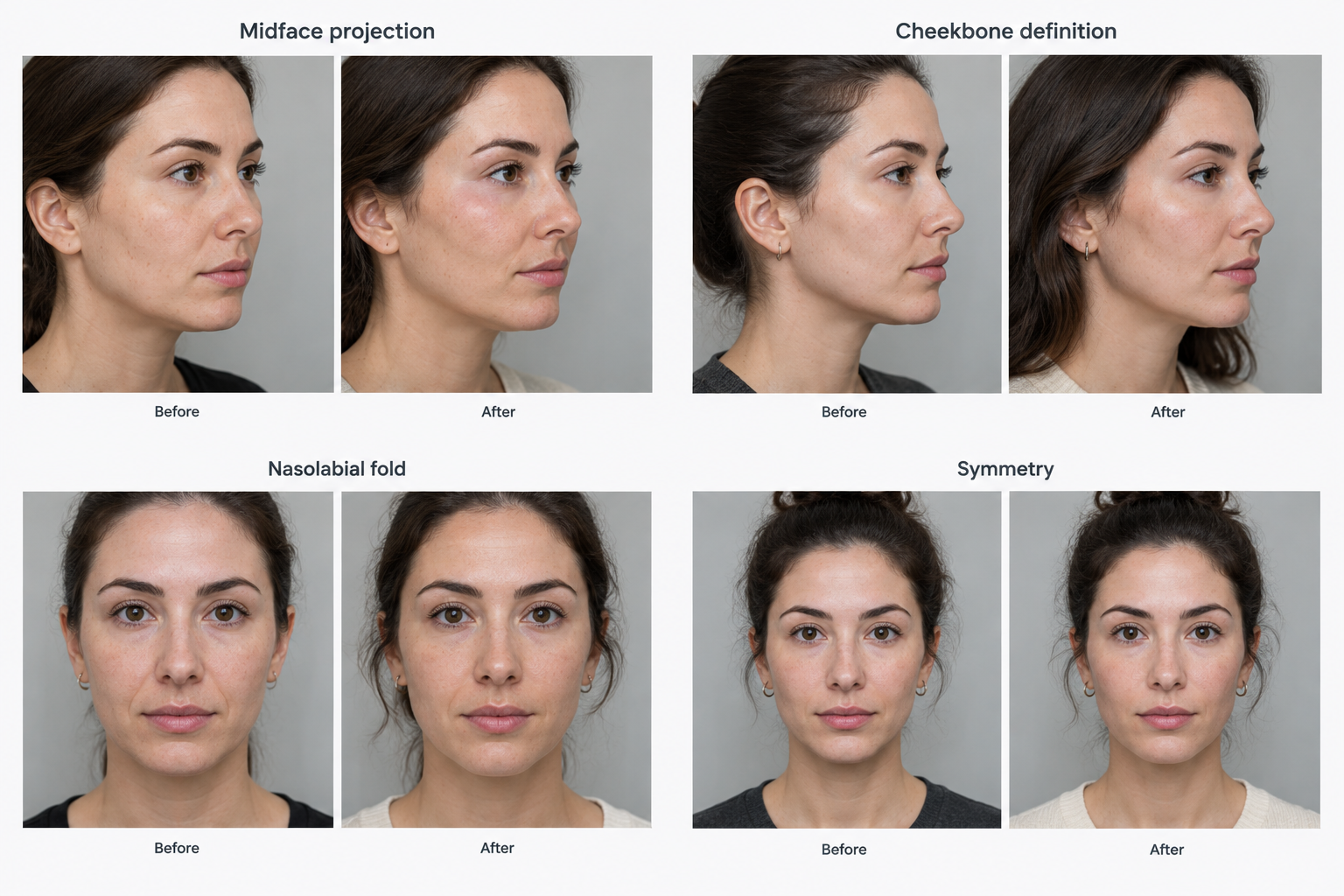
The degree of visible change depends on several factors: the volume of filler used, the specific placement technique, the patient’s baseline anatomy, skin quality, and the degree of pre-existing volume loss. Patients with moderate volume loss and good skin elasticity tend to show the most clearly visible improvement. Those with very little volume loss seeking subtle enhancement may notice a more modest change, while those with significant skin laxity may find that filler alone does not fully address their concerns.
Immediately After Treatment: What to Expect in the First Days
Immediately after cheek filler injections, most patients notice some degree of swelling, which can make the treated area look fuller than the intended final result. Mild bruising at injection sites is common, particularly if a needle rather than a blunt-tipped cannula was used, and tenderness when touching the cheeks is expected for several days. These effects are a normal response to the injection process rather than a sign of a problem.
Swelling typically peaks within the first twenty-four to forty-eight hours and then gradually subsides over the following week. Some residual swelling may persist for up to two to four weeks, which is why practitioners generally advise patients to wait at least two weeks before assessing the final result. During this settling period, the filler integrates with the surrounding tissue and the initial puffiness resolves to reveal the actual outcome.
Patients are usually advised to avoid strenuous exercise, excessive heat such as saunas or hot baths, alcohol, and lying face-down for at least twenty-four to forty-eight hours after treatment. Sleeping with the head slightly elevated can help reduce swelling in the first night or two. Makeup can generally be applied after twenty-four hours, though this varies by clinic protocol and individual healing.
How Long Cheek Filler Results Last
Cheek filler longevity varies depending on the specific product used, the volume injected, the depth of placement, and individual factors such as metabolism, lifestyle, and the degree of facial movement in the treated area. Hyaluronic acid fillers used in the cheeks are generally reported to last between twelve and twenty-four months, with some thicker, more cohesive products lasting toward the longer end of this range when placed in deeper tissue planes where there is less mechanical disruption.
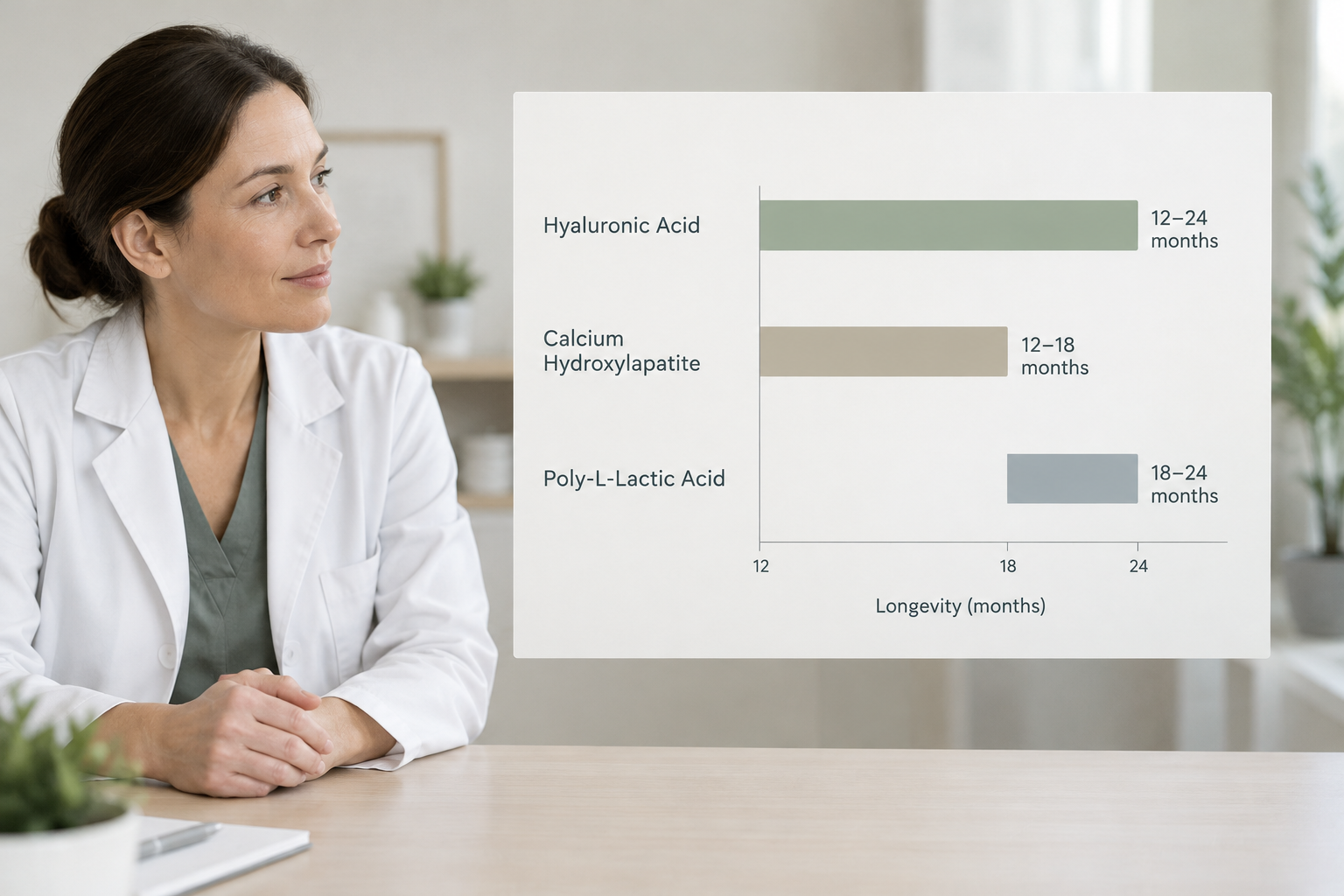
The cheek area tends to retain filler longer than more mobile areas such as the lips, because the midface experiences less repetitive movement. However, results do not disappear abruptly; the filler gradually breaks down and the volume slowly diminishes over time. Many patients choose to have a maintenance treatment before the filler has fully degraded, which can help sustain results with smaller top-up volumes rather than starting from the beginning each time.
Factors that may reduce longevity include a faster individual metabolism, high levels of physical activity, and the use of certain medications or supplements. Conversely, patients with slower metabolisms or those who receive larger initial volumes may retain results for longer. A practitioner can give a more personalised estimate based on the specific product chosen and the patient’s history with previous filler treatments.
Realistic Benefits of Cheek Filler Treatment
When performed by a qualified and experienced practitioner on a suitable candidate, cheek filler treatment may offer several meaningful aesthetic improvements. Restored midface volume can create a more youthful facial contour by addressing the flattening that occurs with age-related fat and bone loss. Improved cheekbone definition can enhance the overall structure of the face, and in some cases the lifting effect of midface volume restoration may reduce the appearance of sagging in the lower face without directly treating that area.
Cheek fillers can also be used to improve facial symmetry where one side has lost more volume than the other, or where there is a natural asymmetry that the patient wishes to address. The treatment is non-surgical, requires no general anaesthesia, and involves minimal downtime compared with surgical options such as malar implants or a facelift. Results are visible relatively quickly, and hyaluronic acid fillers carry the advantage of reversibility if the outcome is unsatisfactory or if a complication arises.
For patients who are not yet ready for or interested in surgical intervention, cheek fillers may represent a useful intermediate option for maintaining facial volume and contour over time with periodic maintenance treatments.
Limitations and What Cheek Fillers Cannot Do
Cheek fillers are not a substitute for surgical procedures when significant skin laxity, deep structural changes, or substantial soft tissue descent is present. Injectable volume can improve the appearance of mild to moderate sagging by restoring the underlying support, but it cannot tighten loose skin or reposition significantly descended tissue in the way that a surgical facelift can. Overfilling the cheeks in an attempt to compensate for skin laxity can result in an unnatural, heavy appearance rather than a lifted one.
Cheek filler treatment also cannot change bone structure, alter the fundamental shape of the face, or produce results equivalent to surgical malar augmentation with implants. Patients seeking dramatic structural change may find that the degree of improvement achievable with injectable filler does not meet their expectations, and a frank discussion with a practitioner about realistic outcomes is essential before proceeding.
Results are temporary, which means ongoing maintenance is required to sustain the effect. The cumulative cost of repeated treatments over several years should be considered when evaluating the treatment against longer-lasting or permanent alternatives. Additionally, the outcome is highly technique-dependent; the same volume of filler placed by two different practitioners can produce noticeably different results, which underlines the importance of choosing a practitioner with specific training and experience in midface anatomy and filler placement.
Risks and Side Effects
All injectable treatments carry risks, and cheek fillers are no exception. Common and expected side effects include swelling, bruising, redness, and tenderness at injection sites, which typically resolve within one to two weeks. Temporary asymmetry during the swelling phase is also common and usually self-corrects as the filler settles.
Less common but more serious risks include nodule formation, where the filler collects in a localised lump beneath the skin, and the Tyndall effect, a bluish discolouration that can occur if filler is placed too superficially. Infection is a rare but possible complication that requires prompt medical treatment. Delayed hypersensitivity reactions, though uncommon with modern hyaluronic acid fillers, have been reported and may present as swelling or firmness weeks or months after treatment.
The most serious risk associated with any facial filler injection is vascular occlusion, which occurs when filler is inadvertently injected into or compresses a blood vessel, potentially restricting blood flow to the skin or, in rare cases, to the eye. Vascular complications in the midface can have serious consequences including tissue necrosis or, in extremely rare cases, vision changes. This risk underlines the critical importance of choosing a practitioner with thorough knowledge of facial vascular anatomy, appropriate training in managing complications, and immediate access to hyaluronidase for emergency dissolution if needed.

Patients should be aware of warning signs that require immediate contact with their practitioner, including severe or worsening pain after treatment, skin colour changes such as blanching or mottling, and any changes to vision.
Who May Be Suitable for Cheek Filler Treatment
Cheek filler treatment may be appropriate for adults who have experienced age-related midface volume loss and wish to restore a more youthful facial contour without surgery. It may also suit younger patients who have naturally flat or underdeveloped cheekbones and wish to improve midface definition. Suitable candidates are generally in good overall health, have realistic expectations about the degree of improvement achievable, and understand that results are temporary.
Patients with mild to moderate skin laxity and good underlying tissue quality tend to achieve the most natural-looking results. Those with very thin skin may be at higher risk of visible filler or surface irregularities, and this should be discussed during consultation.
Cheek filler treatment is generally not recommended during pregnancy or breastfeeding. It may not be suitable for patients with active skin infections or inflammatory skin conditions in the treatment area, those with a history of severe allergic reactions to filler components, patients taking certain blood-thinning medications that significantly increase bruising risk, or those with autoimmune conditions that may affect healing. A thorough medical history review during consultation is essential to identify any contraindications relevant to the individual patient.
The Treatment Appointment: What Happens
A cheek filler appointment typically begins with a consultation or review of the treatment plan agreed at a prior consultation. The practitioner will assess facial anatomy, discuss the intended outcome, and confirm that the patient has no new contraindications since the last assessment. Photographs are usually taken before treatment for clinical records and to allow comparison at follow-up.
The skin is cleaned and a topical anaesthetic cream may be applied to reduce discomfort, though many practitioners use filler products that already contain lidocaine, a local anaesthetic, within the gel itself. Injections are made using either a fine needle or a blunt-tipped cannula, depending on the practitioner’s technique and the specific area being treated. The cannula approach is preferred by some practitioners for deeper midface placement as it may reduce the risk of vascular injury, though both techniques are used clinically.
The appointment itself typically takes between thirty and sixty minutes including preparation time. Discomfort is usually described as mild to moderate pressure or a brief stinging sensation. Most patients are able to return to normal daily activities immediately or within a day, though strenuous activity and certain other activities are usually avoided for a short period as advised by the practitioner.
Alternatives to Cheek Fillers
Patients considering cheek filler treatment should be aware of the available alternatives so they can make an informed comparison. Surgical malar augmentation using solid implants offers a permanent structural change to cheekbone projection and may be more appropriate for patients seeking significant or lasting enhancement without ongoing maintenance. A surgical facelift or midface lift addresses skin laxity and tissue descent more directly than injectable volume replacement and may produce more comprehensive results in patients with advanced signs of facial ageing.
Non-surgical alternatives include energy-based skin tightening treatments such as high-intensity focused ultrasound (HIFU) or radiofrequency, which aim to stimulate collagen production and improve skin firmness rather than adding volume. These treatments may complement cheek fillers or serve as an alternative for patients whose primary concern is skin quality rather than volume loss. Poly-L-lactic acid injections, which stimulate the body’s own collagen production over several months, represent another injectable option that some practitioners use in the midface for gradual, longer-lasting volume improvement.
Thread lifts are another non-surgical option that uses dissolvable sutures to mechanically reposition descended tissue, though evidence for their longevity and effectiveness compared with fillers or surgery remains variable. The most appropriate alternative depends on the individual patient’s anatomy, degree of concern, goals, and medical history, and should be discussed in detail with a qualified practitioner.
Frequently Asked Questions
How soon will I see results after cheek filler treatment?
Volume change is visible immediately after cheek filler injections, but the initial result includes swelling that can make the area look fuller than intended. The true settled result is generally visible after two to four weeks, once swelling has fully resolved and the filler has integrated with the surrounding tissue.
Will cheek fillers look natural?
When an appropriate volume is used and placed correctly for the individual’s anatomy, cheek fillers can produce a natural-looking improvement. Results that appear overfilled or unnatural are often the result of excessive volume, incorrect placement, or filler that has been used to compensate for concerns better addressed by other means. Choosing a practitioner with specific experience in midface anatomy significantly influences the naturalness of the outcome.
Does cheek filler treatment hurt?
Most patients describe the discomfort as mild to moderate. Topical anaesthetic cream applied before treatment and lidocaine contained within many filler products help to reduce discomfort during the procedure. Some patients experience more sensitivity than others, and the level of discomfort can vary depending on the injection technique used.
Can cheek fillers be dissolved if I am unhappy with the result?
Hyaluronic acid fillers can be dissolved using an injectable enzyme called hyaluronidase. This is one of the key advantages of HA-based fillers over non-reversible alternatives. Dissolution is not always complete in a single session and may require more than one treatment, but it provides a meaningful safety option if the result is unsatisfactory or if a complication such as a vascular occlusion occurs.
How much filler is typically used in the cheeks?
The volume used varies considerably depending on the degree of volume loss, the patient’s anatomy, and the intended outcome. A practitioner will determine the appropriate volume during consultation and may recommend a conservative initial treatment with the option to add more at a follow-up appointment. Providing specific volume figures without a clinical assessment is not meaningful, as individual requirements differ significantly.
Will I have significant downtime after cheek fillers?
Most patients do not require time off work or social activities, though visible swelling and possible bruising in the days following treatment should be anticipated. Patients with important social or professional commitments may prefer to schedule treatment at a time when a week or so of potential bruising or swelling would not be problematic.
Can cheek fillers help with under-eye hollows?
In some cases, restoring midface volume with cheek fillers can improve the appearance of the tear trough or under-eye area indirectly, because the hollow appearance is partly caused by the descent of midface tissue leaving the lower eyelid unsupported. However, this is not a direct treatment for the tear trough itself, and patients with significant under-eye hollowing may benefit from a separate assessment of whether tear trough filler or another approach is more appropriate for their specific anatomy.
Making an Informed Decision About Cheek Filler Treatment
Cheek filler treatment can produce meaningful, visible improvements in midface volume and facial contour for suitable candidates, and the before and after changes are often clearly apparent once swelling has settled. The most realistic outcomes involve a more defined, lifted midface appearance, improved facial symmetry, and a reduction in the hollowed look associated with age-related volume loss — rather than a dramatic transformation of facial structure.
The quality of the result depends significantly on the practitioner’s anatomical knowledge, injection technique, and ability to select the right product and volume for each individual. Risks, while manageable in experienced hands, are real and should be understood before proceeding. The temporary nature of the results means that ongoing maintenance is part of the long-term commitment involved.
If you are considering cheek filler treatment, a consultation with a qualified aesthetic practitioner who can assess your anatomy, discuss your goals honestly, and explain what is and is not achievable for your specific situation is the most important first step. Bring questions, ask to see examples of the practitioner’s clinical work, and ensure you feel confident in the information provided before making a decision.