

A UV index of 3 sits at the lower end of the moderate range, and yes — tanning is possible at this level, but so is skin damage. Many people assume that a moderate UV reading means safe sun exposure, yet ultraviolet radiation at UV index 3 is sufficient to trigger melanin production, cause cumulative DNA damage, and increase long-term skin cancer risk. Understanding what the UV index actually measures, how your skin responds to it, and what protective steps are appropriate can help you make more informed decisions about sun exposure.
Key Takeaways
- UV index 3 is classified as moderate, meaning ultraviolet radiation is strong enough to cause tanning and skin damage, particularly in fair-skinned individuals.
- Tanning at any UV level is a sign of skin stress — melanin production is the skin’s protective response to UV-induced DNA damage.
- Sun protection measures including broad-spectrum SPF sunscreen, protective clothing, and shade are recommended even at UV index 3.
- Cumulative UV exposure at moderate levels contributes to photoageing, hyperpigmentation, and increased skin cancer risk over time.
- Skin type, time of day, altitude, and surface reflectivity all influence how much UV radiation your skin actually receives at any given index reading.
What the UV Index Actually Measures
The UV index is an internationally standardised scale developed by the World Health Organization and the United Nations Environment Programme to communicate the intensity of ultraviolet radiation reaching the Earth’s surface. The scale runs from 0 (no UV radiation, typically at night) upward, with values of 11 or above classified as extreme. A reading of 3 falls within the moderate band, which spans from 3 to 5 on the scale.
The index specifically measures the biologically effective UV radiation — that is, the portion of the ultraviolet spectrum most capable of damaging human skin and eyes. It accounts for both UVA and UVB radiation, weighted according to their relative biological impact. UVB radiation is primarily responsible for sunburn and plays a significant role in vitamin D synthesis, while UVA radiation penetrates more deeply into the dermis, contributing to photoageing, collagen breakdown, and indirect DNA damage. Both are present at UV index 3.
It is important to understand that the UV index is a snapshot of intensity, not a measure of total dose. A full day spent outdoors at UV index 3 delivers considerably more cumulative UV radiation than a brief midday exposure at UV index 6. Duration of exposure matters as much as the index reading itself.
Can You Actually Tan at UV Index 3?
Yes, tanning is possible at UV index 3, though the rate at which a visible tan develops depends heavily on individual skin type, the duration of exposure, and environmental factors such as cloud cover, altitude, and surface reflectivity. For people with fair or light skin — classified as Fitzpatrick skin types I and II — UV index 3 is sufficient to cause both tanning and sunburn, particularly with prolonged unprotected exposure. Those with medium to olive skin tones may tan more readily with less risk of burning, while darker skin types have greater natural UV protection but are not immune to UV-induced damage.
The biological process behind tanning begins with UV radiation penetrating the outer layers of the skin and reaching melanocytes — the pigment-producing cells in the epidermis. UVB radiation causes direct DNA damage in these cells, triggering an immediate protective response: melanin production increases and the pigment disperses upward through the skin layers, creating the visible darkening known as a tan. This process is the skin’s attempt to shield its DNA from further damage, not a sign of good health. A tan at UV index 3 is therefore evidence that UV radiation has been sufficient to stress skin cells, even if no sunburn occurs.
Immediate pigment darkening — a rapid but temporary tan that appears within minutes of UVA exposure — can also occur at moderate UV levels. This effect fades quickly and does not provide meaningful sun protection. The longer-lasting tan that develops over days results from new melanin synthesis stimulated by UVB exposure.
How Long Does It Take to Tan at UV Index 3?
The time required to develop a visible tan at UV index 3 varies considerably between individuals. For a person with fair skin (Fitzpatrick type II), unprotected exposure at UV index 3 may begin to cause reddening within approximately 30 to 60 minutes, depending on the time of day and environmental conditions. A visible tan may develop over several sessions of moderate exposure, though this comes with an accumulating risk of skin damage.
People with medium skin tones (Fitzpatrick types III and IV) typically have a higher minimum erythemal dose — the threshold UV dose required to cause visible reddening — meaning they can tolerate longer unprotected exposure before burning, and may develop a tan more readily without immediate sunburn. However, this does not mean UV damage is absent; it means the visible warning sign of burning appears later.
Environmental factors that amplify UV exposure at index 3 include high altitude, where the atmosphere filters less UV radiation; reflective surfaces such as snow, sand, and water, which can significantly increase the effective UV dose reaching the skin; and cloud cover, which reduces but does not eliminate UV radiation. On a clear day at moderate altitude near a reflective surface, UV index 3 conditions can deliver a meaningfully higher effective dose than the index alone suggests.
UV Index 3 and Skin Damage: What the Evidence Shows
A common misconception is that skin damage only occurs at high or very high UV index levels. Dermatological and photobiological research consistently demonstrates that UV-induced DNA damage — specifically the formation of cyclobutane pyrimidine dimers in skin cell DNA — begins at relatively low UV doses, well within the moderate UV index range. These DNA lesions, if not repaired by the body’s cellular repair mechanisms, can accumulate over time and contribute to mutations associated with skin cancer development.
Photoageing, the premature ageing of skin caused by chronic UV exposure, is primarily driven by UVA radiation, which is present throughout daylight hours and penetrates window glass. At UV index 3, UVA levels are sufficient to contribute to collagen and elastin degradation in the dermis over repeated exposures. The clinical signs of photoageing — fine lines, uneven skin tone, loss of elasticity, and hyperpigmentation — develop gradually and are largely the result of cumulative moderate UV exposure rather than occasional high-intensity exposure alone.
Hyperpigmentation conditions such as melasma and post-inflammatory hyperpigmentation are particularly sensitive to UV exposure at any level. Even moderate UV radiation can stimulate excess melanin production in susceptible individuals, worsening existing pigmentation concerns. For anyone managing a pigmentation condition or recovering from a skin treatment, UV index 3 is not a safe threshold for unprotected sun exposure.
Who Is Most at Risk at UV Index 3?
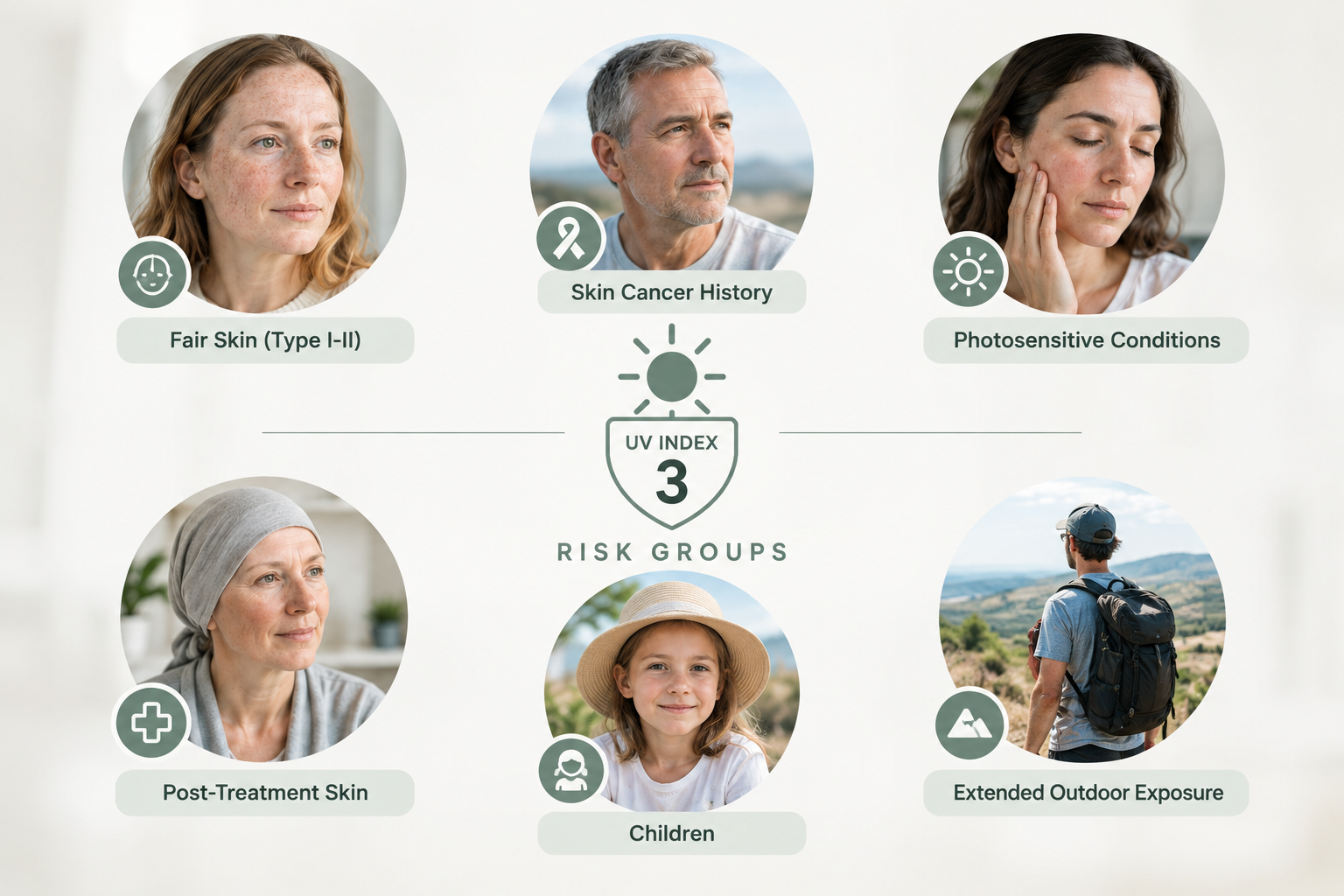
While UV index 3 represents a moderate risk level for the general population, certain groups face a meaningfully higher risk of harm from this level of UV exposure. Understanding individual risk factors helps determine what level of sun protection is appropriate.
- Fair-skinned individuals (Fitzpatrick types I and II): Those with pale skin, light hair, and light eyes have lower baseline melanin levels and a reduced natural UV filter, making them more susceptible to both sunburn and UV-induced DNA damage at moderate UV levels.
- People with a personal or family history of skin cancer: Previous skin cancer or a family history of melanoma significantly increases the importance of consistent sun protection at all UV levels.
- Those with photosensitive conditions: Conditions such as lupus, rosacea, and certain forms of eczema can be aggravated by UV exposure at moderate levels. Some medications — including certain antibiotics, retinoids, and diuretics — also increase photosensitivity.
- People with active hyperpigmentation or post-treatment skin: Skin recovering from chemical peels, laser treatments, microneedling, or other aesthetic procedures is often more vulnerable to UV-induced pigmentation changes. Sun protection is typically a clinical requirement during recovery from these treatments.
- Children: Childhood UV exposure is a significant risk factor for melanoma development later in life. Sun protection for children is recommended at UV index 3 and above.
- Those spending extended time outdoors: Cumulative exposure duration at UV index 3 can deliver a total UV dose comparable to shorter exposures at higher index levels.
Sun Protection at UV Index 3: What Is Actually Recommended
The World Health Organization recommends sun protection measures when the UV index reaches 3 or above. This recommendation applies to the general population and is not limited to people with fair skin or those prone to burning. At UV index 3, the following protective measures are considered appropriate.
Broad-spectrum sunscreen with an SPF of at least 30 is recommended for outdoor exposure at UV index 3, particularly for extended periods. Broad-spectrum formulations protect against both UVA and UVB radiation. Sunscreen should be applied generously to all exposed skin approximately 20 minutes before sun exposure and reapplied every two hours, or more frequently after swimming or sweating. No sunscreen provides complete UV protection, and SPF ratings specifically measure UVB protection; UVA protection varies by formulation.
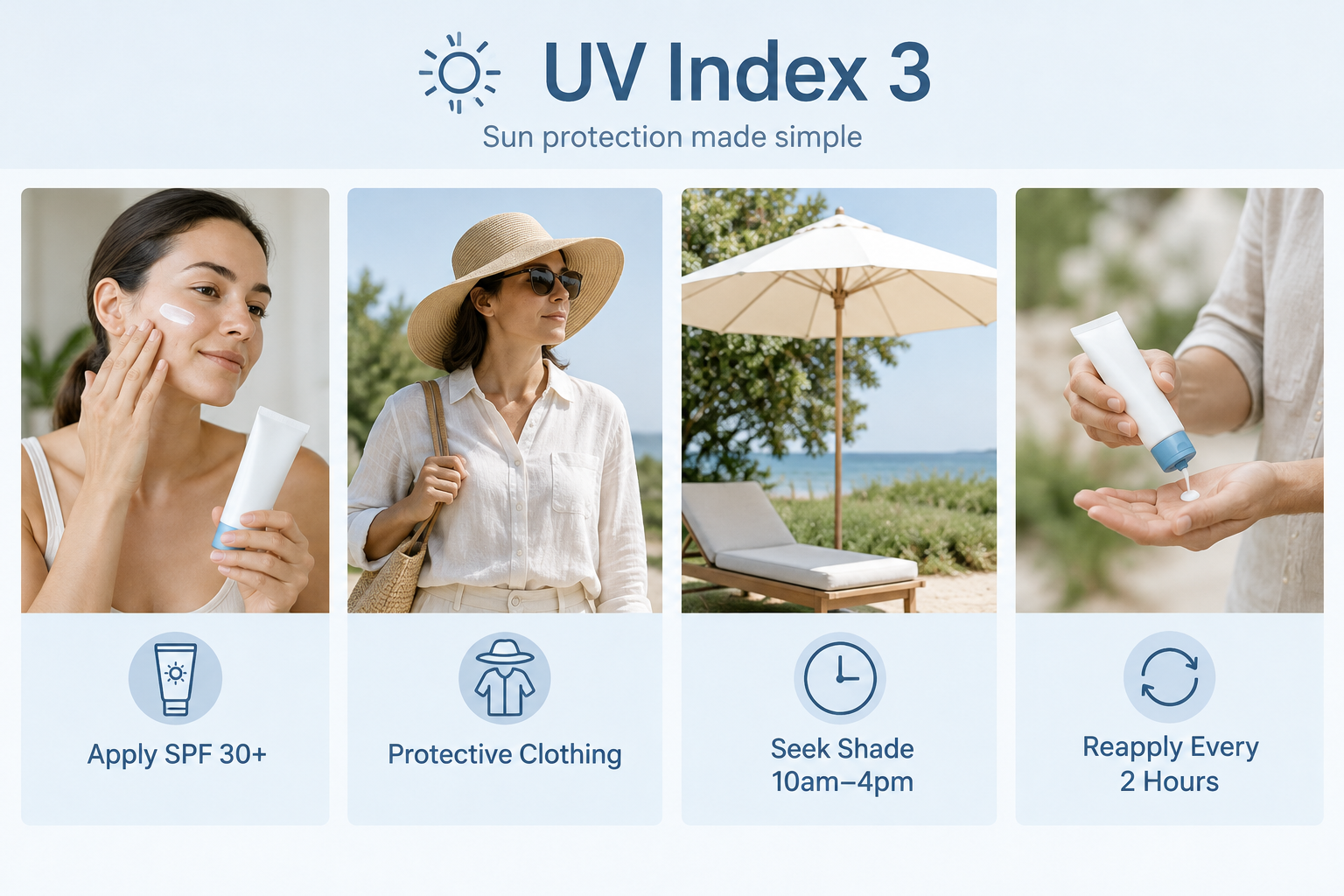
Protective clothing including long-sleeved garments, wide-brimmed hats, and UV-protective sunglasses provides a physical barrier against UV radiation. Tightly woven, darker fabrics generally offer greater UV protection than lightweight or loosely woven materials. UV-protective clothing with a rated UPF (Ultraviolet Protection Factor) offers a reliable and consistent level of protection.
Seeking shade during peak UV hours — typically between 10am and 4pm in most locations — reduces UV exposure significantly. Even at UV index 3, midday sun delivers a higher UV dose than morning or late afternoon sun due to the shorter atmospheric path UV radiation travels when the sun is higher in the sky.
Avoiding deliberate tanning at any UV level is the position of major dermatological and cancer prevention organisations. There is no UV exposure level at which tanning is considered biologically safe, as the tanning response itself indicates UV-induced cellular stress.
Tanning Beds and UV Index 3: An Important Distinction
Some people searching for information about tanning at UV index 3 may be comparing outdoor sun exposure to tanning bed use. It is worth clarifying that tanning beds operate differently from natural sunlight and are not equivalent to a specific UV index reading. Many commercial tanning beds emit predominantly UVA radiation at intensities that can exceed peak midday summer sunlight. The International Agency for Research on Cancer classifies tanning bed use as a Group 1 carcinogen — the highest risk category — meaning there is sufficient evidence that tanning bed use causes cancer in humans. This classification applies regardless of the UV index outdoors on any given day.
Tanning beds do not offer a controlled or safer alternative to outdoor tanning at moderate UV levels. The risks associated with tanning bed use, including significantly elevated melanoma risk, are well established in the scientific literature and are not mitigated by the UV index of the outdoor environment.
The Relationship Between UV Exposure, Vitamin D, and Skin Health
A frequently raised concern about sun protection is whether consistent sunscreen use prevents adequate vitamin D synthesis. UVB radiation is required for the skin to produce vitamin D, and this is a legitimate consideration. However, the amount of UVB exposure required for vitamin D synthesis is relatively small — typically a few minutes of incidental sun exposure on the face, arms, or hands several times per week is sufficient for most people in moderate climates during summer months.
Dermatological guidance generally supports obtaining vitamin D through brief, incidental sun exposure and dietary sources or supplementation rather than through deliberate, prolonged tanning. Intentional tanning to boost vitamin D levels is not considered a clinically appropriate strategy, as the UV dose required to produce a visible tan significantly exceeds what is needed for vitamin D synthesis and carries meaningful skin damage risk. A qualified healthcare provider can assess vitamin D status through a blood test and advise on appropriate supplementation if levels are insufficient.
Skin Treatments and UV Index 3: Special Considerations
For individuals who have recently undergone aesthetic skin treatments — including chemical peels, laser resurfacing, intense pulsed light (IPL) therapy, microneedling, or topical retinoid treatments — UV index 3 represents a meaningful risk to treatment outcomes and skin recovery. Post-treatment skin is typically more photosensitive, with a compromised barrier and increased vulnerability to UV-induced pigmentation changes and inflammation.
Most aesthetic practitioners advise strict sun avoidance and consistent broad-spectrum SPF use for a defined period following skin treatments. Exposure to UV radiation at moderate levels during this recovery window can trigger post-inflammatory hyperpigmentation, compromise treatment results, and prolong healing. If you are managing skin concerns such as melasma, uneven skin tone, or post-acne marks, UV protection at UV index 3 and above is a clinical priority, not merely a cosmetic preference.
Topical ingredients commonly used in aesthetic skincare — including retinoids, alpha hydroxy acids, and certain brightening agents — can increase photosensitivity. If you are using these ingredients, sun protection at UV index 3 is particularly important, and your treating practitioner or dermatologist can advise on appropriate precautions specific to your regimen.
Alternatives to UV Tanning for a Sun-Kissed Appearance
For those who want the appearance of a tan without the associated UV exposure risks, several alternatives are available that do not involve ultraviolet radiation.
- Self-tanning products: Dihydroxyacetone (DHA)-based self-tanners react with amino acids in the outermost layer of the skin to produce a temporary brown colour. Modern formulations have improved significantly in terms of natural appearance and ease of application. DHA-based products do not provide meaningful UV protection and should be used alongside sunscreen when outdoors.
- Gradual tanning moisturisers: These combine a low concentration of DHA with a daily moisturiser, allowing gradual colour development over several applications. They are generally well tolerated and suitable for most skin types.
- Professional spray tanning: Applied by a trained technician, professional spray tanning uses DHA solution to create an even, customised colour result. The effect is temporary, typically lasting five to ten days depending on skin type and aftercare.
- Bronzing makeup products: Cosmetic bronzers, tinted moisturisers, and body makeup provide an immediate, washable colour effect without any UV exposure or chemical reaction with the skin.
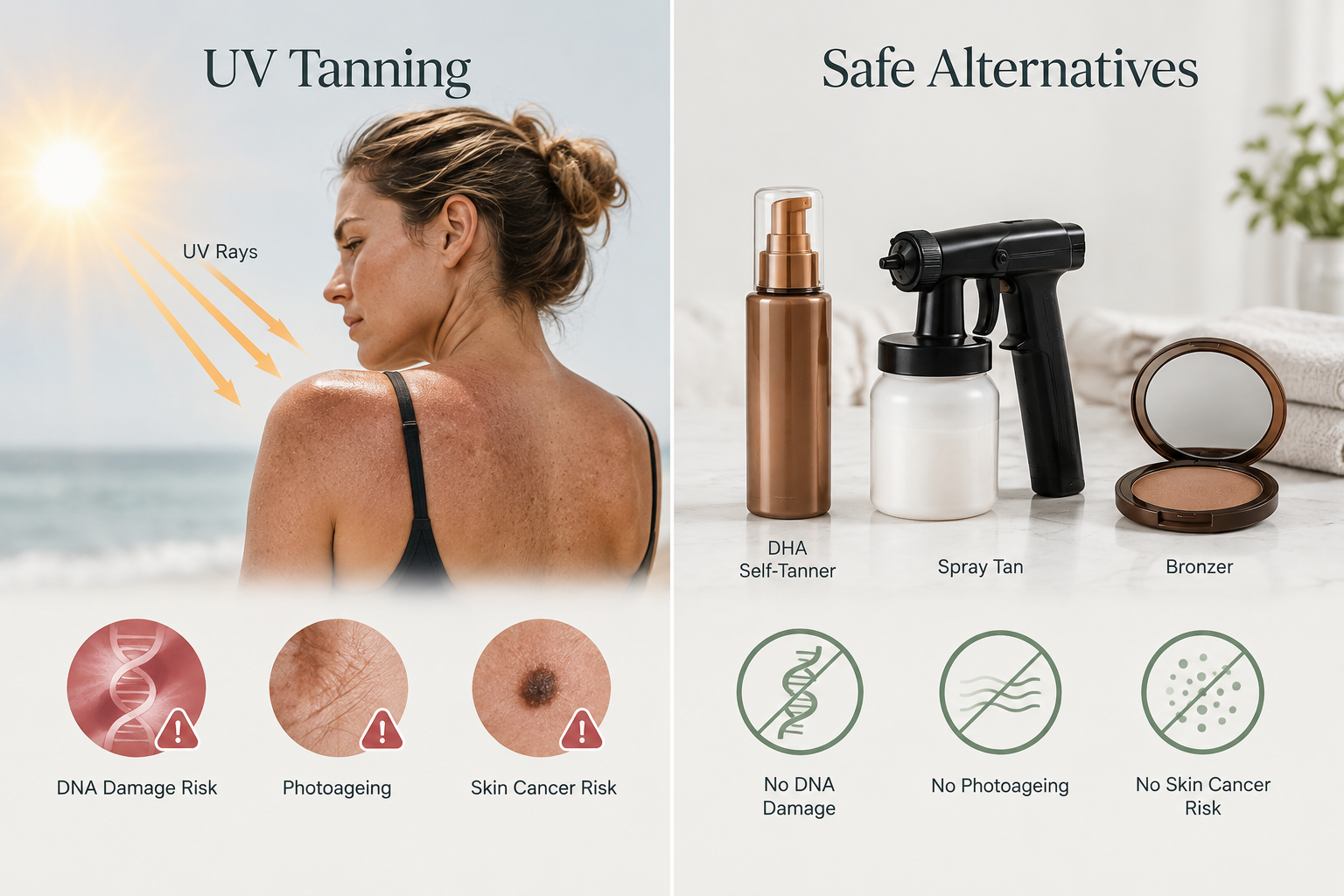
None of these alternatives carry the skin cancer risk, photoageing effects, or DNA damage associated with UV tanning, making them the recommended approach for those seeking a tanned appearance from a skin health perspective.
Frequently Asked Questions
Is UV index 3 safe for sunbathing?
UV index 3 is classified as moderate, and while it is lower than high or very high UV levels, it is not considered safe for unprotected sunbathing. Major health organisations recommend sun protection measures — including broad-spectrum SPF sunscreen, protective clothing, and shade — at UV index 3 and above. Prolonged unprotected exposure at this level can cause tanning, sunburn in fair-skinned individuals, and cumulative skin damage over time.
How quickly can you burn at UV index 3?
The time to sunburn at UV index 3 depends on skin type. Fair-skinned individuals (Fitzpatrick types I and II) may begin to experience reddening within approximately 30 to 60 minutes of unprotected midday exposure. People with medium skin tones have a higher threshold but are not immune to burning. Environmental factors such as altitude, reflective surfaces, and cloud cover can shorten the time to burning.
Does UV index 3 cause skin damage even without burning?
Yes. UV-induced DNA damage in skin cells can occur at UV doses below the threshold required to cause visible sunburn. Repeated moderate UV exposure without burning still contributes to cumulative DNA damage, photoageing, and long-term skin cancer risk. The absence of sunburn does not indicate the absence of UV-induced cellular harm.
Can you get vitamin D from UV index 3?
Yes, UVB radiation at UV index 3 is sufficient to stimulate vitamin D synthesis in the skin. Brief, incidental exposure — a few minutes on exposed skin — is generally adequate for vitamin D production in most people during summer months. Prolonged deliberate tanning is not necessary or recommended for vitamin D purposes, and supplementation is an alternative for those with limited sun exposure or assessed deficiency.
Should I wear sunscreen at UV index 3?
Yes. The World Health Organization and most national dermatological and cancer prevention bodies recommend applying broad-spectrum sunscreen with at least SPF 30 when the UV index reaches 3 or above, particularly for extended outdoor exposure. This recommendation applies to all skin types, though the urgency is greatest for fair-skinned individuals and those with photosensitive conditions or recent skin treatments.
Is a tan from UV index 3 healthier than one from a tanning bed?
Neither form of tanning is considered healthy from a dermatological perspective. Both involve UV-induced DNA damage as the mechanism of melanin production. Tanning beds are classified as a Group 1 carcinogen by the International Agency for Research on Cancer and are associated with significantly elevated melanoma risk. Outdoor tanning at UV index 3 carries lower acute intensity but still contributes to cumulative skin damage and cancer risk with repeated exposure.
Making an Informed Decision About Sun Exposure and Skin Health
UV index 3 is sufficient to tan the skin, and that fact alone is worth taking seriously. The tanning response is not a sign of healthy skin — it is a biological defence mechanism triggered by UV-induced cellular stress. Whether you are spending time outdoors for leisure, exercise, or work, understanding that moderate UV levels carry real skin health implications helps you make more protective choices without necessarily avoiding the outdoors entirely.
Consistent, practical sun protection — broad-spectrum sunscreen, appropriate clothing, and shade during peak hours — significantly reduces cumulative UV damage without requiring complete sun avoidance. For those managing skin conditions, recovering from aesthetic treatments, or using photosensitising skincare ingredients, UV index 3 warrants particular attention and consistent protective measures.
If you have concerns about sun damage, hyperpigmentation, photoageing, or skin cancer risk, a consultation with a qualified dermatologist or aesthetic practitioner can provide a personalised assessment and appropriate guidance. Skin health decisions are most effective when based on individual skin type, history, and goals rather than on general UV index thresholds alone.