

Breast reduction surgery is one of the most consistently well-rated procedures in plastic surgery, with many patients reporting significant improvements in physical comfort and quality of life. If you are researching how much a breast reduction costs, you will quickly find that prices vary considerably — and understanding why can help you compare quotes meaningfully, ask the right questions, and make a more informed decision before your consultation.
Key Takeaways
- Breast reduction surgery costs in the UK typically range from approximately £6,000 to £12,000 for private treatment, depending on the surgeon, clinic, technique, and your individual anatomy.
- The total price should include surgeon fees, anaesthetist fees, hospital or facility costs, pre-operative assessments, post-operative care, and compression garments — always confirm what is and is not included.
- NHS funding may be available in some cases where the procedure is considered medically necessary, but eligibility criteria are strict and vary by region.
- Choosing a surgeon based on price alone carries meaningful risk; qualifications, experience, and aftercare standards matter significantly for safety and outcomes.
- A thorough consultation with a qualified plastic surgeon is essential before making any decision, as individual anatomy, health status, and goals all affect suitability and the recommended approach.
What Is Breast Reduction Surgery?
Breast reduction surgery, known medically as reduction mammaplasty, is a surgical procedure that removes excess breast tissue, fat, and skin to reduce the size and weight of the breasts. The nipple and areola are typically repositioned as part of the procedure. The goal is usually to create a breast size and shape that is more proportionate to the patient’s body, while also addressing physical symptoms such as chronic neck, shoulder, and back pain, skin irritation beneath the breast fold, and difficulty with physical activity. In some cases, patients also seek the procedure for aesthetic reasons, including asymmetry or disproportionate breast size relative to their frame.
Breast reduction is a major surgical procedure performed under general anaesthesia, typically requiring a hospital stay of one night and a recovery period of several weeks. Because it involves incisions and tissue removal, it carries surgical risks and results in permanent scarring, though scars generally fade over time. The procedure is distinct from a breast lift (mastopexy), which reshapes and repositions the breast without significantly reducing volume, although the two are sometimes combined.
How Much Does Breast Reduction Surgery Cost in the UK?
Private breast reduction surgery in the UK generally costs between approximately £6,000 and £12,000, though prices outside this range are possible depending on the provider and circumstances. This wide range reflects genuine differences in what is included, where the procedure is performed, and the experience level of the surgical team. Some clinics advertise lower starting prices that may not include all associated fees, so it is important to request a fully itemised quote before comparing providers.
In the United States, breast reduction costs are broadly comparable in range when converted, though the healthcare system differs significantly. Internationally, some patients consider travelling abroad for surgery at lower cost, but this introduces additional considerations around aftercare, follow-up, and managing complications at a distance — factors that should be weighed carefully against any potential saving.
What Factors Affect the Cost of Breast Reduction?
Several distinct cost components contribute to the overall price of breast reduction surgery. Understanding each one helps you assess whether a quote represents good value or whether important elements may be missing.

Surgeon’s Fee
The surgeon’s fee is typically the largest single component of the total cost. Surgeons with extensive specialist experience in breast surgery, fellowship training, or a strong record of complex cases generally charge more than those earlier in their careers. Membership of professional bodies such as the British Association of Plastic, Reconstructive and Aesthetic Surgeons (BAPRAS) or the British Association of Aesthetic Plastic Surgeons (BAAPS) is a useful indicator of training standards, though it does not guarantee outcomes. The complexity of your individual case — including the amount of tissue to be removed, your anatomy, and whether asymmetry correction is required — also influences the surgeon’s fee.
Anaesthetist Fee
Breast reduction surgery is performed under general anaesthesia, which means a separate anaesthetist fee applies. This is sometimes included in an all-inclusive package price, but in other cases it is quoted separately. Anaesthetist fees typically range from several hundred to over a thousand pounds depending on the expected duration of the procedure and the anaesthetist’s experience. Always confirm whether this fee is included in any quote you receive.
Hospital or Clinic Facility Costs
The facility where surgery takes place contributes significantly to the overall cost. Private hospitals in central London or other major cities tend to charge more than facilities in other regions. Facility costs cover the use of the operating theatre, nursing care, overnight accommodation if required, and the use of specialist equipment. Some clinics operate their own surgical facilities, which can affect pricing structures. The standard of the facility — including its Care Quality Commission (CQC) registration status in England — is an important safety consideration, not just a cost variable.
Pre-operative Assessments and Tests
Before surgery, you will typically need a consultation with the surgeon, blood tests, and possibly other health assessments to confirm you are fit for a general anaesthetic. Some providers include these in the overall package price; others charge separately. Pre-operative mammography may also be recommended depending on your age and medical history. Clarifying what pre-operative care is included helps you avoid unexpected additional costs.
Post-operative Care and Follow-up Appointments
Aftercare is a critical part of breast reduction surgery and should not be treated as optional. Reputable providers include a defined number of post-operative appointments in their quoted price, during which the surgeon or specialist nurse monitors healing, checks for complications, and addresses any concerns. Some providers also include access to a 24-hour helpline in the early recovery period. If aftercare appointments are not clearly included in a quote, ask specifically what is covered and for how long.
Compression Garments and Dressings
Following breast reduction surgery, patients typically wear a supportive surgical bra or compression garment for several weeks. These are sometimes provided as part of the surgical package and sometimes charged separately. The cost is relatively modest compared to the overall procedure, but it is worth confirming what is supplied.
Revision Surgery
Most reputable providers will discuss their policy on revision surgery during the consultation process. Some offer a defined period during which minor revisions related to the original procedure are included, while others charge separately for any additional work. Understanding this policy before committing is important, as revision rates in breast surgery, while generally low with experienced surgeons, are not zero.
NHS Breast Reduction: Is It Available?
NHS funding for breast reduction surgery is available in some circumstances, but eligibility criteria are strict and vary between NHS Clinical Commissioning Groups (now Integrated Care Boards) across England, as well as between the devolved health services in Scotland, Wales, and Northern Ireland. Generally, NHS funding is more likely to be considered where there is clear evidence of significant physical symptoms — such as chronic back, neck, or shoulder pain directly attributable to breast size — that have not responded to conservative management such as physiotherapy, weight management, or specialist bra fitting.
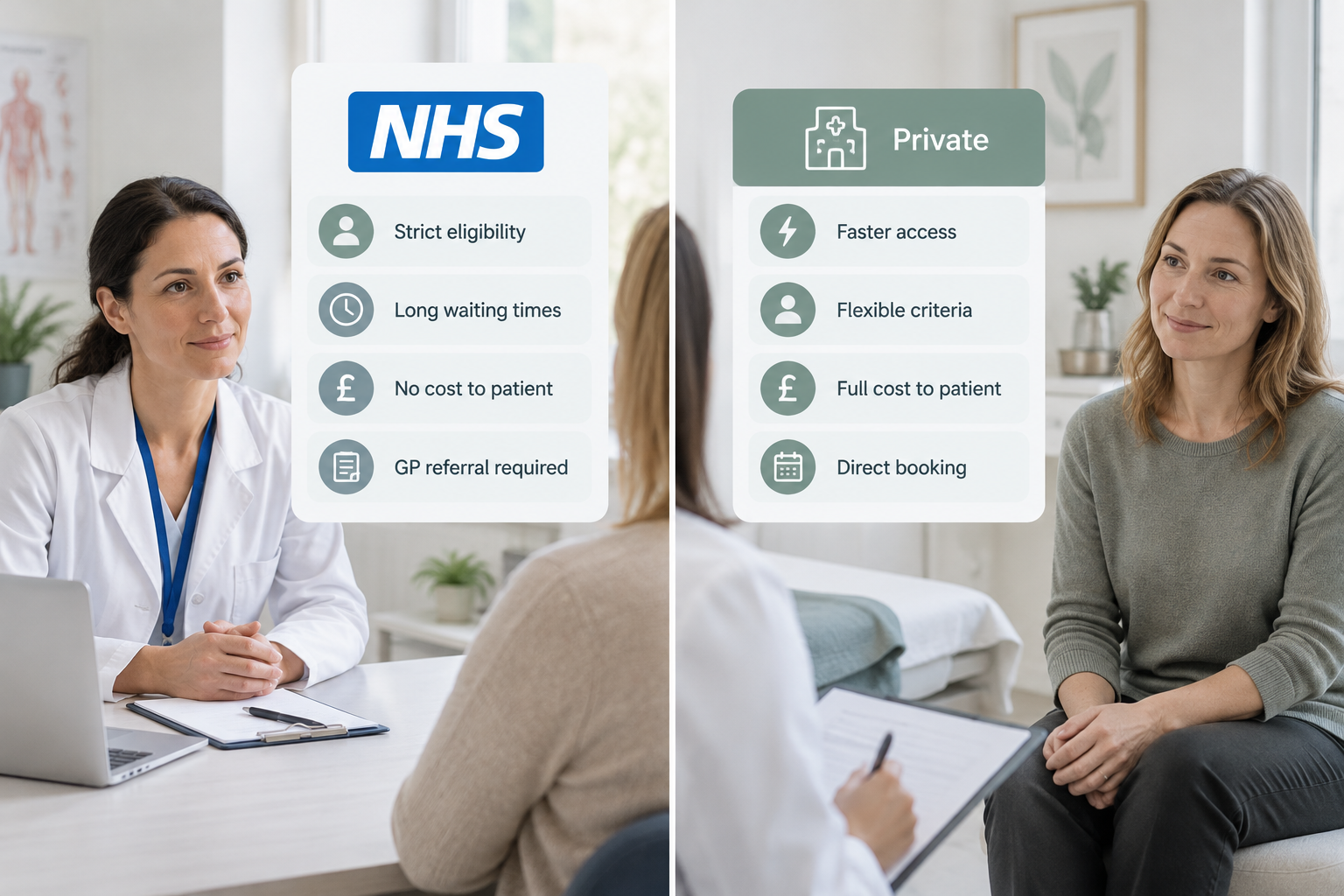
Purely cosmetic motivations are unlikely to meet NHS funding criteria. Even where physical symptoms are present, many NHS bodies apply additional criteria such as minimum BMI thresholds or minimum breast tissue weight to be removed. Waiting times for NHS breast reduction surgery can also be lengthy. If you believe you may meet the criteria, your GP is the appropriate starting point for a referral and assessment. A private consultation does not affect your right to seek NHS assessment separately.
Geographic Variation in Breast Reduction Prices
Where you have surgery in the UK affects the price. Clinics and hospitals in London and the South East typically charge more than those in the Midlands, North of England, Scotland, or Wales, reflecting higher operating costs in those regions. This does not mean that higher-priced locations always deliver better outcomes, nor that lower-cost regions represent lower standards — but it is a genuine factor in price variation. If you are considering travelling to a different region for surgery, factor in travel and accommodation costs, and consider how practical it will be to attend follow-up appointments.
Breast Reduction Abroad: Weighing the Costs and Risks
Medical tourism for breast reduction surgery — particularly to countries such as Turkey, Poland, or Thailand — can appear significantly cheaper, with some packages advertised at prices well below UK private rates. However, the lower upfront cost does not account for several important considerations. If a complication arises after you return home, managing it through the UK healthcare system may be complex, and your original surgical team may be unavailable. Follow-up care is more difficult to coordinate across borders, and standards of surgical training, facility regulation, and patient safety oversight vary between countries. Travel insurance policies often exclude complications arising from elective cosmetic surgery abroad. These are not reasons to dismiss the option entirely, but they are factors that deserve careful, honest consideration before making a decision based primarily on cost.
Recovery, Downtime, and Associated Costs
The financial cost of breast reduction surgery extends beyond the surgical fee itself. Recovery typically involves two to four weeks away from work for desk-based roles, and potentially longer for physically demanding jobs. Lost income during this period is a real cost for many patients. You may also need to arrange childcare or domestic help during the early recovery phase, when lifting and strenuous activity are restricted. Prescription medications, over-the-counter pain relief, and additional supportive garments may add modest further costs. Planning for these indirect costs gives a more realistic picture of the total financial commitment involved.
Risks and Limitations to Consider Alongside Cost
Breast reduction surgery carries the risks associated with any major surgical procedure under general anaesthesia, as well as procedure-specific risks. These include bleeding, infection, adverse reaction to anaesthesia, delayed wound healing, changes in nipple or breast sensation (which may be temporary or permanent), asymmetry, and scarring. More serious but less common risks include fat necrosis (localised tissue death) and, in rare cases, partial or complete nipple loss. The ability to breastfeed may be affected, which is an important consideration for patients who have not yet completed their family. Discussing these risks in detail with your surgeon before consenting to the procedure is essential — a thorough pre-operative consultation is not a formality but a meaningful part of the process.
Results from breast reduction surgery are generally long-lasting, but they are not entirely permanent. Significant weight changes, pregnancy, and the natural ageing process can all affect breast size and shape over time. Setting realistic expectations about long-term outcomes is part of a responsible pre-operative discussion.
Alternatives to Breast Reduction Surgery
For patients who are not ready for surgery, are not suitable candidates, or are primarily seeking relief from physical symptoms rather than a significant size reduction, some non-surgical or less invasive options may be worth discussing with a clinician. Specialist bra fitting by a trained fitter can make a meaningful difference to comfort and posture for some patients. Physiotherapy targeting posture and core strength may help manage musculoskeletal symptoms. Weight loss, where relevant and achievable, can reduce breast volume to some degree, though the distribution of fat loss is not controllable. None of these alternatives replicate the degree of size reduction or reshaping achievable through surgery, but they may be appropriate interim or complementary measures depending on individual circumstances.
A breast lift (mastopexy) is a surgical alternative for patients whose primary concern is shape and position rather than volume. It involves less tissue removal and may be suitable for patients with moderate ptosis (drooping) but adequate breast size. A combined breast reduction and lift is also possible and is sometimes the recommended approach depending on anatomy.
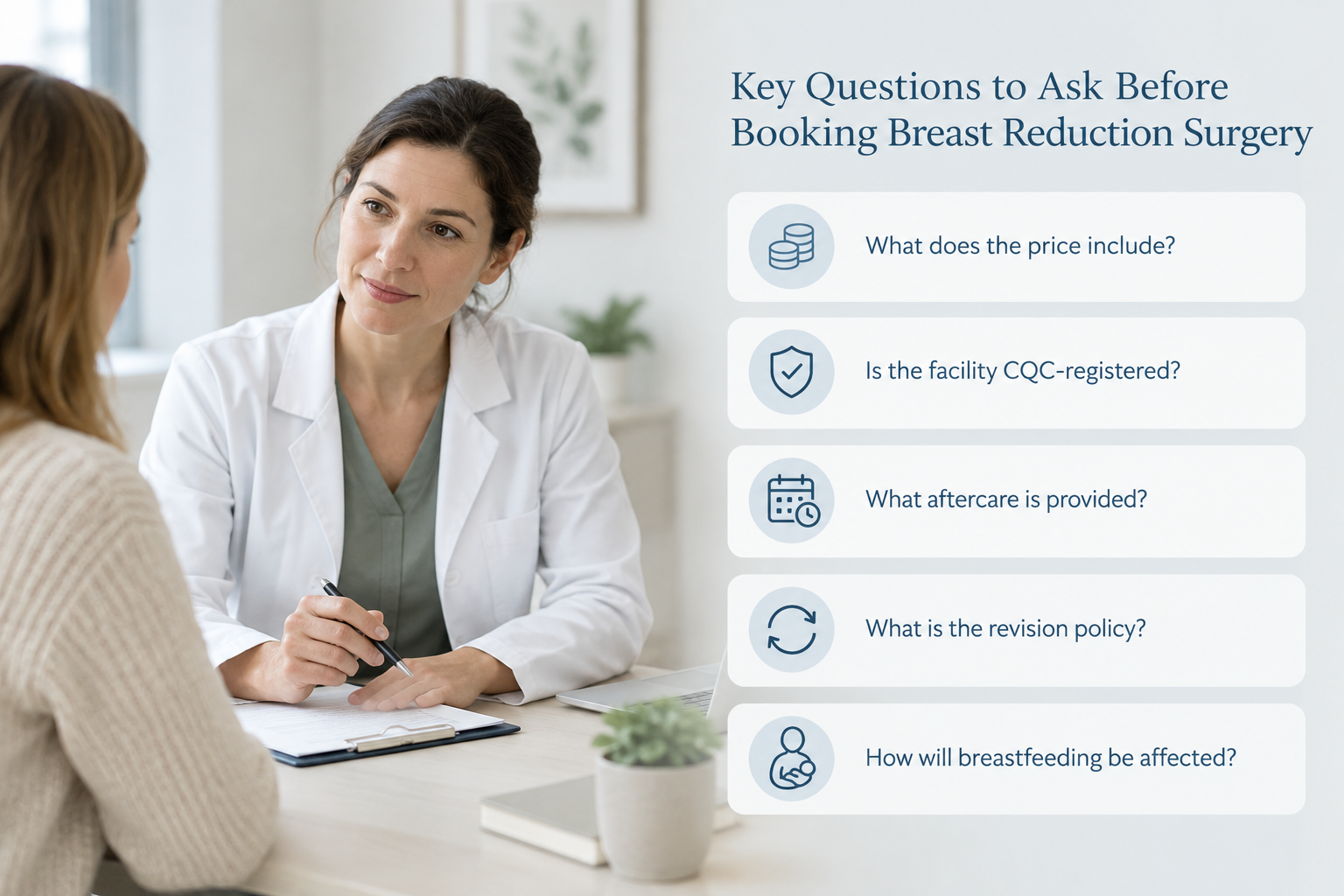
Questions to Ask Before Booking Breast Reduction Surgery
- What does the quoted price include, and what is charged separately?
- What are the surgeon’s specific qualifications and experience in breast reduction surgery?
- Is the facility CQC-registered (or equivalent in your region)?
- What surgical technique will be used, and why is it recommended for my anatomy?
- How many post-operative appointments are included, and for how long?
- What is the policy on revision surgery if I am unhappy with the result?
- What are the realistic risks for someone with my health profile?
- How might the procedure affect breastfeeding?
- What results are realistic for my body type and goals?
- What happens if I experience a complication — who do I contact and how quickly can I be seen?
Frequently Asked Questions
Is breast reduction surgery available on the NHS?
NHS funding may be available where there is documented evidence of significant physical symptoms caused by breast size that have not responded to conservative treatment. Eligibility criteria vary by region and are assessed on a case-by-case basis. Your GP can advise on whether a referral for assessment is appropriate in your situation.
Does the price of breast reduction surgery include aftercare?
This varies between providers. Some all-inclusive packages cover a defined number of post-operative appointments, while others charge separately. Always ask for a fully itemised breakdown of what is and is not included before comparing quotes from different clinics.
How long does recovery from breast reduction take?
Most patients take two to four weeks off work, depending on the physical demands of their role. Strenuous exercise and heavy lifting are typically restricted for six weeks or more. Swelling and changes in sensation can persist for several months, and scars continue to mature for up to two years.
Will breast reduction surgery affect my ability to breastfeed?
Breast reduction surgery may affect the ability to breastfeed, as milk ducts and nerves can be disrupted during the procedure. The degree of impact depends on the surgical technique used and the amount of tissue removed. This is an important consideration to discuss in detail with your surgeon if future breastfeeding is a priority.
Are the results of breast reduction surgery permanent?
Breast reduction surgery produces long-lasting results, but they are not entirely permanent. Significant weight fluctuation, pregnancy, and natural ageing can all affect breast size and shape over time. Maintaining a stable weight after surgery helps preserve the outcome.
Is it safe to have breast reduction surgery abroad to save money?
Having surgery abroad may reduce the upfront cost, but it introduces additional considerations including difficulty accessing follow-up care, challenges managing complications at a distance, and variability in surgical training and facility standards between countries. These factors should be weighed carefully against any potential financial saving.
How do I know if a surgeon is qualified to perform breast reduction surgery?
In the UK, look for surgeons on the GMC Specialist Register in plastic surgery. Membership of BAAPS or BAPRAS indicates specialist training in aesthetic and reconstructive breast surgery. You can verify a surgeon’s registration status directly through the GMC website.
Making a Well-Informed Decision About Breast Reduction Surgery
Understanding how much a breast reduction costs requires looking beyond the headline figure. The total investment includes surgeon and anaesthetist fees, facility costs, pre-operative assessments, post-operative care, and indirect costs such as time off work — and the balance between these components varies significantly between providers. A lower quoted price is not always a better deal if it excludes essential aftercare or reflects less experienced surgical care.
Breast reduction surgery can offer meaningful improvements in physical comfort and quality of life for suitable candidates, but it is a major surgical procedure with real risks that deserve serious consideration. The most important step before making any financial commitment is a thorough consultation with a qualified, GMC-registered plastic surgeon who can assess your individual anatomy, health status, and goals, explain the realistic outcomes and risks for your specific situation, and provide a fully transparent breakdown of costs. Taking the time to do this properly is the most valuable investment you can make in the process.