

One millilitre of lip filler is the standard starting amount offered at most aesthetic clinics, yet patients frequently arrive at consultations unsure what that volume actually means for their lips. The result depends on far more than the number on a syringe — individual anatomy, the filler product chosen, injection technique, and the specific outcome you are hoping for all shape what 1ml can realistically achieve. This article explains what 1ml of lip filler typically delivers, who it may suit, what the treatment experience involves, how long results tend to last, and what the meaningful limitations and risks are.
Key Takeaways
- 1ml is the most commonly used starting volume for lip filler and can add noticeable definition and subtle volume, though the visible change varies considerably between individuals.
- Results are temporary, typically lasting between six and twelve months depending on the filler product, metabolism, and lifestyle factors.
- Swelling in the first few days after treatment can make lips appear larger than the final settled result, so final outcomes are best assessed at two weeks.
- Lip filler carries real risks including bruising, asymmetry, migration, and rare but serious vascular complications; choosing a qualified, experienced practitioner is essential.
- 1ml may not be sufficient for patients seeking significant volume increase; a thorough consultation helps align expectations with what is achievable.
What Does 1ml of Lip Filler Actually Mean?
One millilitre is a small but clinically meaningful volume — roughly equivalent to one-fifth of a teaspoon. In the context of lip augmentation, 1ml of hyaluronic acid filler is enough to create a visible change in most patients, but the degree of that change depends heavily on the starting anatomy. Someone with naturally thin lips will notice a more dramatic difference than someone who already has moderate volume and is seeking refinement. Practitioners often describe 1ml as a conservative to moderate amount, suitable for a first treatment or for patients who want enhancement that remains proportionate and natural-looking.
Hyaluronic acid is the active ingredient in the majority of lip fillers used in aesthetic practice. It is a naturally occurring substance in the body that attracts and retains water, which is what gives treated lips their plumper appearance. Common hyaluronic acid filler brands used for lip augmentation include Juvederm, Restylane, and Belotero, each with slightly different gel consistencies and cross-linking technologies that influence how the product behaves in the lip tissue. The specific product selected by your practitioner will affect the texture, longevity, and overall aesthetic of the result.
What Results Can 1ml of Lip Filler Realistically Achieve?
For most patients, 1ml of lip filler can achieve one or more of the following outcomes, depending on where the product is placed and what the treatment goals are:
- Increased volume: A modest but visible increase in the fullness of the upper lip, lower lip, or both.
- Improved definition: Enhancement of the vermilion border — the edge that outlines the lip — creating a more defined lip shape without necessarily adding significant bulk.
- Cupid’s bow enhancement: Accentuating the natural peaks of the upper lip for a more structured appearance.
- Correction of asymmetry: Addressing minor differences in volume or shape between the upper and lower lip, or between the left and right sides.
- Reduction of fine lines around the mouth: Subtle hydration and support to the lip area can soften perioral lines, though this is not the primary function of lip filler.
- Restoration of lost volume: As lips naturally lose volume and definition with age, 1ml may help restore a more youthful appearance rather than creating an augmented look.
What 1ml is unlikely to achieve is a dramatic transformation in patients who start with very thin lips and want significantly fuller results. In those cases, a practitioner may discuss whether a staged approach — beginning with 1ml and reassessing at a follow-up appointment — is more appropriate than attempting to place a larger volume in a single session. Overfilling in one appointment can increase the risk of an unnatural appearance and complications.
How Lip Anatomy Affects the Outcome
Lip anatomy varies considerably between individuals, and this variation has a direct bearing on what 1ml of filler can accomplish. The ratio of upper to lower lip, the natural projection of the lips, the height of the lip body, the position of the philtrum columns, and the overall facial proportions all influence how filler distributes and how the result appears. Practitioners trained in facial aesthetics assess these features during consultation to plan product placement that complements the individual face rather than applying a one-size-fits-all approach.
Patients with a longer upper lip distance — the space between the base of the nose and the top of the lip — may find that filler alone does not achieve the lift they are hoping for, and a practitioner may discuss whether additional treatments such as a lip flip using botulinum toxin could complement the filler result. Similarly, patients with significant volume asymmetry may find that 1ml needs to be distributed unevenly between the two sides to achieve balance, which affects how much overall volume increase is visible.
The Treatment Experience: What Happens During a Lip Filler Appointment
A lip filler appointment typically begins with a consultation, during which the practitioner assesses lip anatomy, discusses the patient’s goals, reviews medical history, and explains the procedure, expected results, and risks. Photographs are usually taken before treatment. A topical anaesthetic cream is commonly applied to the lip area and left for around fifteen to twenty minutes to reduce discomfort. Most hyaluronic acid lip fillers also contain lidocaine — a local anaesthetic — within the formulation, which further reduces discomfort as the product is injected.
The injections themselves are typically completed within fifteen to thirty minutes. The practitioner uses a fine needle or a blunt-tipped cannula, or a combination of both, depending on the technique and the areas being treated. Patients generally describe the sensation as a mild stinging or pressure. After the injections, the practitioner may gently massage the lips to distribute the product evenly and assess the symmetry of the result. The entire appointment, including consultation and aftercare advice, usually takes between thirty minutes and one hour.
Swelling, Downtime, and the Settling Period
Swelling is a normal and expected response to lip filler injections and is one of the most important factors to understand when assessing results. Immediately after treatment, the lips will appear larger than the final settled outcome — sometimes significantly so. This initial swelling typically peaks within the first twenty-four to forty-eight hours and then gradually subsides over the following days. Most of the swelling resolves within one week, but the lips may continue to settle and soften for up to two weeks after treatment.
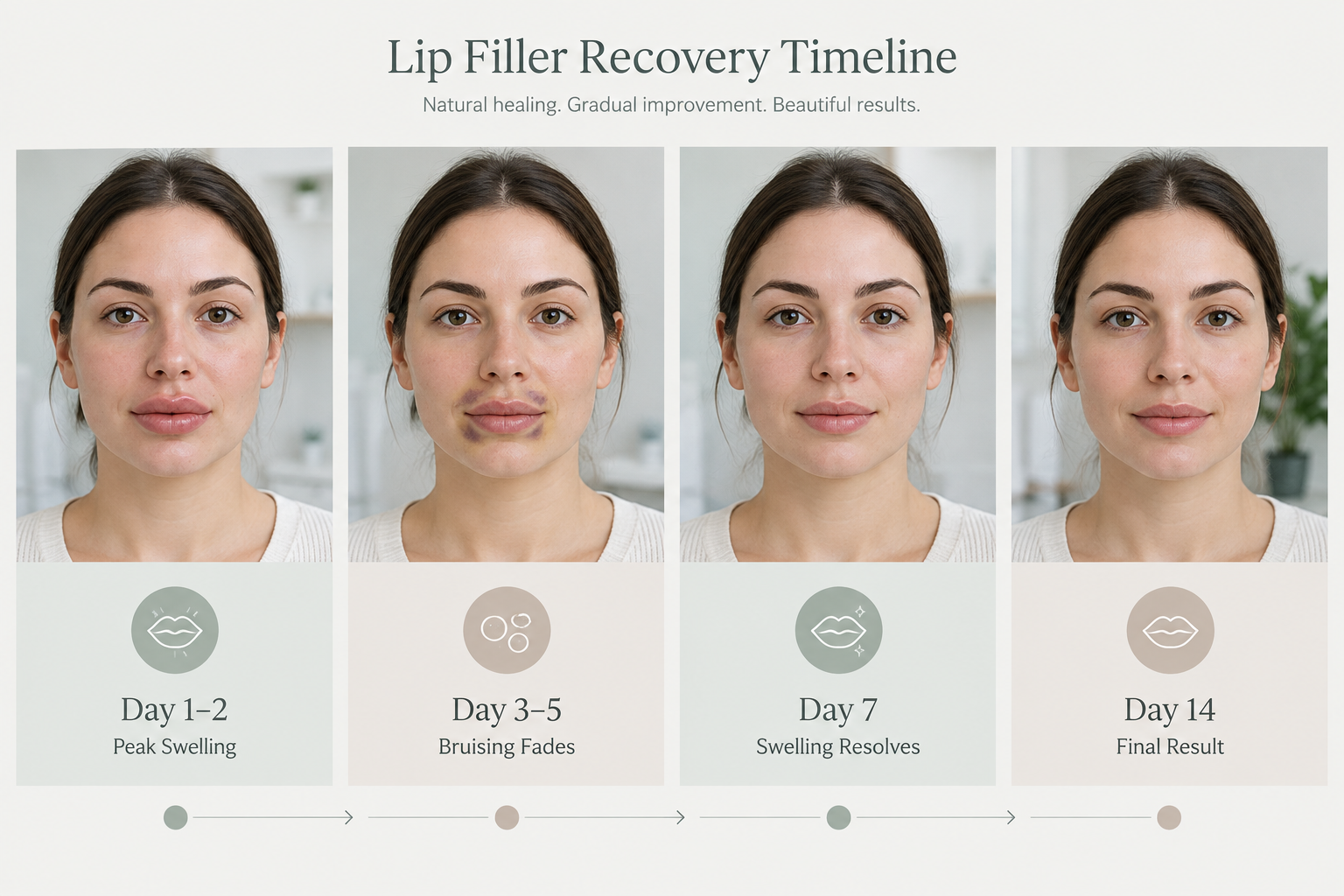
Bruising is also common and can affect the lips and the surrounding skin. The extent of bruising varies between individuals and depends on factors including skin fragility, medications such as aspirin or ibuprofen, and the technique used. Bruising typically fades within five to ten days. Tenderness and mild firmness in the treated area are also normal in the first few days. Patients are generally advised to avoid strenuous exercise, alcohol, and excessive heat — such as saunas or hot baths — for at least twenty-four to forty-eight hours after treatment to minimise swelling and bruising.
Because of the settling period, practitioners typically recommend waiting at least two weeks before assessing the final result or deciding whether a top-up is needed. Judging the outcome in the first few days, when swelling is still present, can lead to unrealistic comparisons and unnecessary concern or, conversely, unrealistic satisfaction that does not reflect the settled result.
How Long Does 1ml of Lip Filler Last?
The longevity of lip filler results varies between patients and depends on several factors. As a general guide, hyaluronic acid lip filler typically lasts between six and twelve months, with many patients finding that results begin to diminish noticeably at around six to nine months. The lips are a highly mobile area of the face — they move constantly during speaking, eating, and facial expression — which means that filler in this location tends to break down more quickly than filler placed in less mobile areas such as the cheeks or tear troughs.
Individual metabolism plays a meaningful role. Patients with faster metabolic rates tend to break down hyaluronic acid more quickly. Lifestyle factors such as high levels of physical activity, sun exposure, and smoking may also influence how long results last. The specific filler product used matters too — denser, more cross-linked formulations are generally designed to last longer, while softer products may integrate more naturally but dissipate more quickly. Repeat treatments are typically needed to maintain results, and some patients find that with consistent maintenance appointments, results may appear to last slightly longer over time, though this is not guaranteed.
Risks and Side Effects of Lip Filler
Lip filler is a medical procedure and carries real risks that patients should understand before proceeding. Common side effects include swelling, bruising, tenderness, and redness at the injection sites, all of which are generally temporary. Less common but possible complications include:
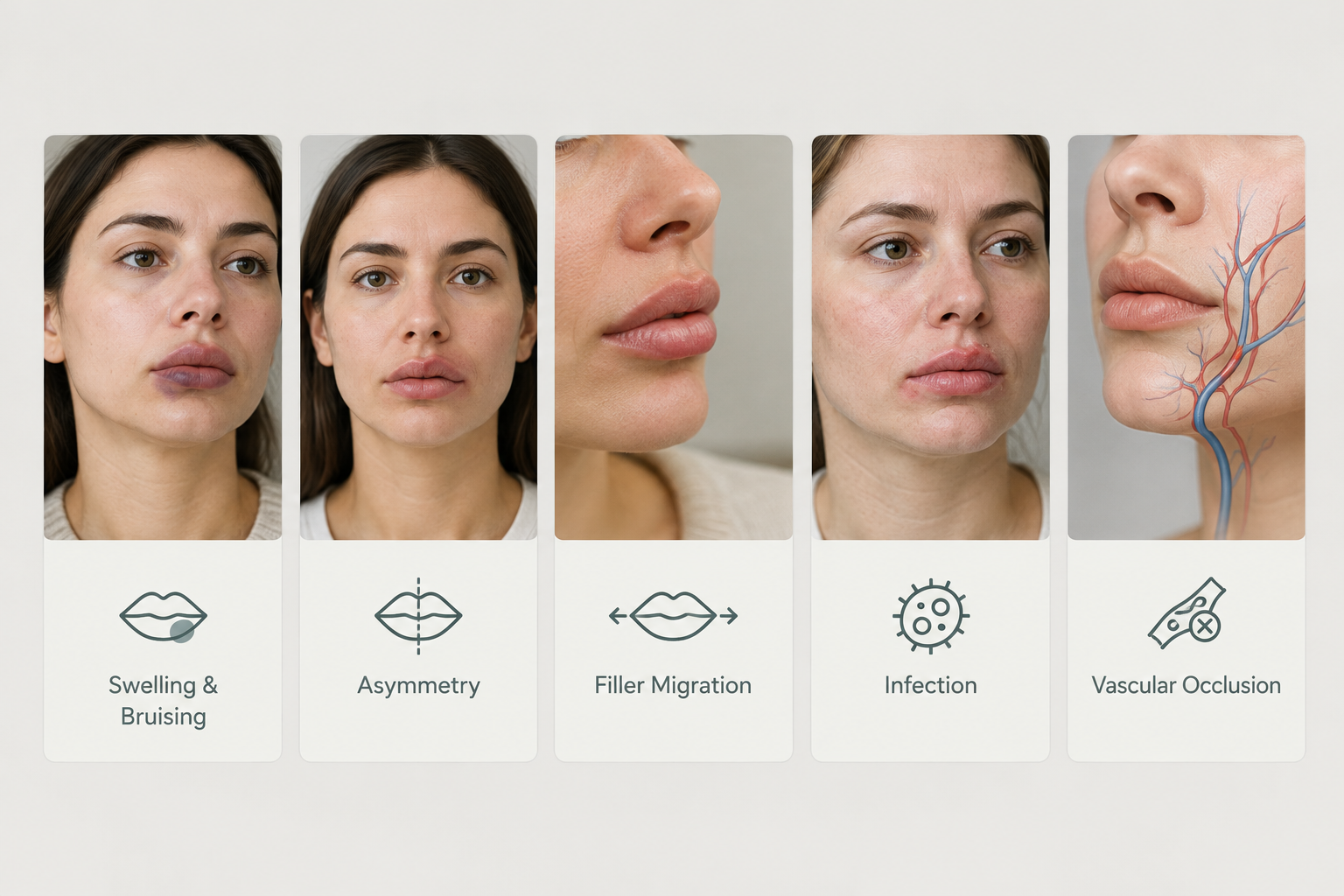
- Asymmetry: Uneven distribution of filler can result in lips that appear unbalanced. This may be correctable with additional product or, if necessary, with hyaluronidase — an enzyme that dissolves hyaluronic acid filler.
- Lumps and irregularities: Small lumps or areas of firmness can develop if the product is not distributed evenly. These often resolve on their own but may require massage or dissolution.
- Filler migration: Hyaluronic acid can occasionally migrate beyond the intended treatment area, creating a blurred or unnatural lip border. This is more likely with overfilling or repeated treatments without adequate assessment.
- Infection: Any injection carries a small risk of infection. Signs of infection include increasing redness, warmth, pain, and swelling beyond the expected post-treatment period.
- Allergic reaction: Reactions to hyaluronic acid fillers are rare but possible. Reactions to the lidocaine component or other ingredients in the formulation can also occur.
- Vascular occlusion: This is the most serious potential complication of lip filler. If filler is inadvertently injected into or compresses a blood vessel, it can restrict blood flow to the surrounding tissue. This is a medical emergency requiring immediate treatment with hyaluronidase. Symptoms include severe pain, blanching of the skin, or a dusky discolouration. Choosing a practitioner who carries hyaluronidase and is trained to recognise and manage this complication is critically important.
The risk profile of lip filler is meaningfully influenced by practitioner skill, anatomical knowledge, and the clinical environment. Treatments performed by appropriately trained medical professionals in a clinical setting carry a lower risk of serious complications than those performed in non-clinical environments by inadequately trained individuals.
Who May Be Suitable for 1ml Lip Filler
Lip filler with 1ml of hyaluronic acid may be worth discussing with a qualified practitioner if you are in good general health, have realistic expectations about the degree of change achievable, and are seeking subtle to moderate enhancement, improved definition, or restoration of volume lost with age. It may also be appropriate for patients who have had lip filler before and are returning for a maintenance treatment.
Lip filler is generally not recommended during pregnancy or breastfeeding. Patients with active infections, cold sores, or inflammatory skin conditions affecting the lip area should postpone treatment until the condition has resolved. Certain autoimmune conditions and medications that affect bleeding or immune response may also affect suitability. A thorough medical history review at consultation is essential to identify any factors that could increase risk or affect the outcome.
Alternatives to 1ml Lip Filler
Lip filler is not the only option for patients seeking lip enhancement or rejuvenation. Depending on the specific concern, a practitioner may discuss one or more of the following alternatives:
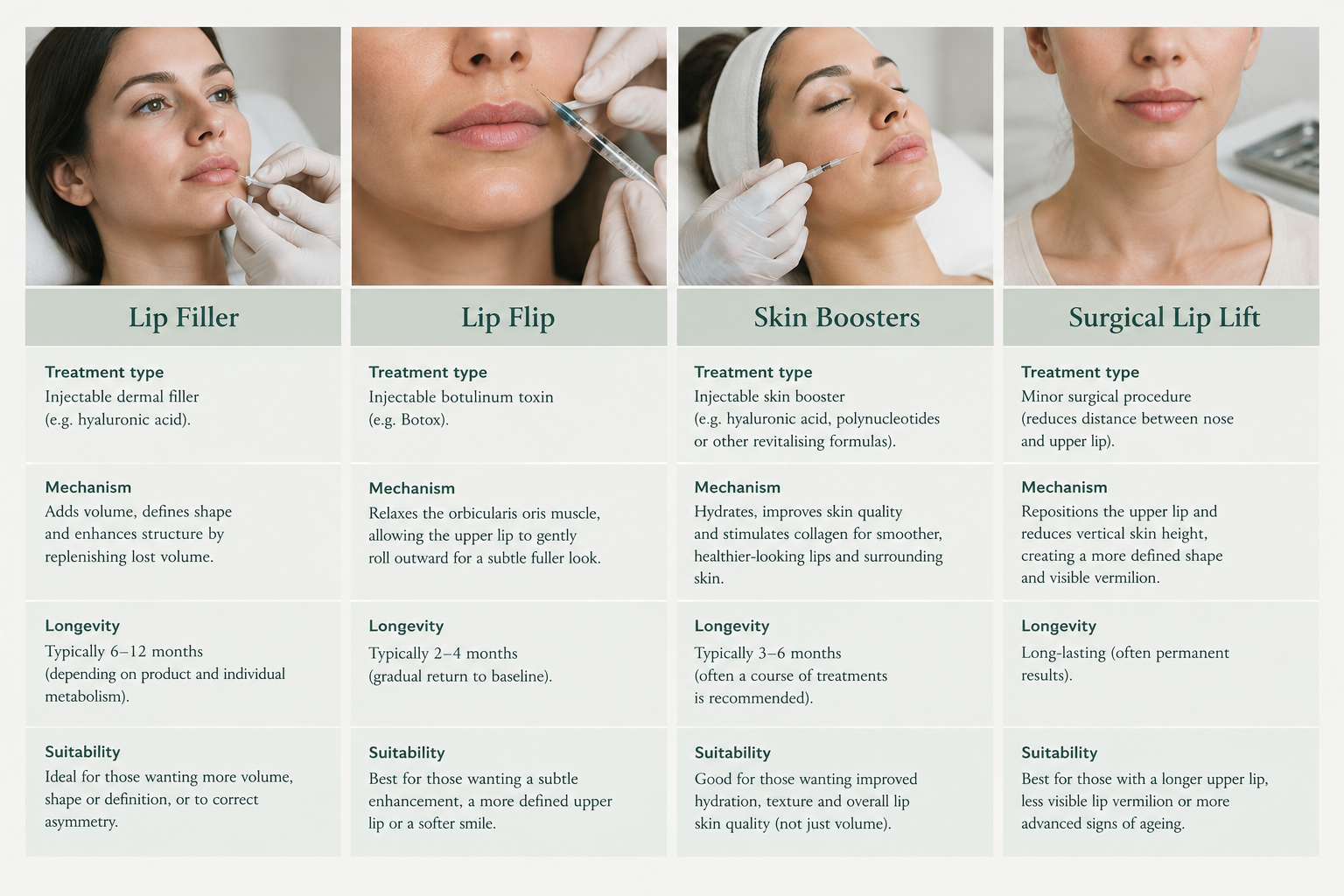
- Lip flip with botulinum toxin: A small amount of botulinum toxin injected into the orbicularis oris muscle around the upper lip can cause the lip to roll slightly outward, creating the appearance of a fuller upper lip without adding volume. This is a subtle effect and is not a substitute for filler in patients seeking significant volume increase, but it can complement filler or suit patients who want a very conservative result.
- Lip line treatment: Botulinum toxin or small amounts of filler can be used specifically to address perioral lines — the fine vertical lines that develop above and below the lips — without augmenting the lip body itself.
- Skin booster injections: Products such as Profhilo or Restylane Skinboosters can be used in and around the lip area to improve hydration and skin quality rather than add structural volume. These may suit patients whose primary concern is skin texture rather than shape or fullness.
- Surgical lip augmentation: For patients seeking permanent or more significant results, surgical options such as a lip lift or fat transfer exist, though these carry greater risks, recovery time, and cost. These are typically discussed with a plastic or maxillofacial surgeon rather than in an aesthetic clinic setting.
The most appropriate option depends on the individual’s anatomy, goals, and medical history. A qualified practitioner can help identify which approach — or combination of approaches — is most likely to achieve a result that aligns with realistic expectations.
Frequently Asked Questions
Will 1ml of lip filler look natural?
For most patients, 1ml is considered a conservative to moderate amount and can produce a natural-looking result when placed by an experienced practitioner who takes individual anatomy into account. The appearance depends on the starting lip size, the product used, and the injection technique. Patients with very thin lips may notice a more visible change than those with moderate natural volume.
Can I dissolve lip filler if I don’t like the result?
Hyaluronic acid lip filler can be dissolved using an enzyme called hyaluronidase, which breaks down the filler relatively quickly. This is one of the advantages of hyaluronic acid over permanent or semi-permanent filler materials. Dissolution is not always complete in a single session and may require more than one treatment, but it provides a meaningful safety net if the result is not as expected.
How soon after treatment can I assess the final result?
Practitioners generally recommend waiting at least two weeks before assessing the final outcome, as swelling can significantly alter the appearance of the lips in the first few days. Assessing results too early may lead to unnecessary concern or an inaccurate impression of the settled result.
Is 1ml enough for a first lip filler treatment?
For most patients seeking their first lip filler treatment, 1ml is a reasonable starting point. It allows the practitioner to assess how the individual’s lips respond to the product and how the patient feels about the change before deciding whether additional volume is appropriate at a future appointment. A staged approach is generally considered safer and more predictable than placing a large volume in a single session.
Does lip filler hurt?
Most patients describe the sensation as mild to moderate discomfort rather than significant pain. Topical anaesthetic cream applied before treatment and the lidocaine contained within most filler formulations help to reduce discomfort during the procedure. Individual pain tolerance varies, and some areas of the lip may be more sensitive than others.
How often will I need to repeat the treatment?
Most patients find that lip filler results begin to diminish noticeably between six and nine months after treatment, with some lasting up to twelve months. Repeat treatments are needed to maintain results. The frequency of maintenance appointments varies between individuals depending on metabolism, lifestyle, and the specific product used.
What should I look for when choosing a practitioner for lip filler?
Look for a practitioner with appropriate medical qualifications, specific training in facial anatomy and injectable treatments, and a clinical environment where emergency protocols — including access to hyaluronidase — are in place. Reviewing before-and-after photographs, reading verified patient reviews, and attending a thorough consultation before committing to treatment are all reasonable steps to take.
Is 1ml Lip Filler the Right Starting Point for You?
For patients seeking subtle enhancement, improved lip definition, or restoration of volume that has diminished with age, 1ml of hyaluronic acid lip filler is a clinically reasonable starting point. It is enough to create a visible and meaningful change for most people while remaining within a range that experienced practitioners consider manageable and reversible. The temporary nature of hyaluronic acid filler — and the ability to dissolve it if needed — makes it a more forgiving option than permanent alternatives, particularly for patients who are new to lip augmentation.
That said, 1ml is not a universal solution. Patients with very thin lips who want significant volume, or those with complex asymmetry, may find that a single 1ml treatment does not fully meet their expectations. A staged approach, beginning conservatively and building gradually over multiple appointments, is often the most predictable path to a result that looks proportionate and suits the individual face. Equally important is the choice of practitioner — the skill, anatomical knowledge, and clinical judgement of the person performing the treatment have a greater influence on the outcome than the volume of product used.
If you are considering lip filler, a thorough consultation with a qualified aesthetic practitioner is the appropriate first step. This allows your anatomy, goals, and medical history to be assessed individually, and gives you the opportunity to ask questions and understand what is realistically achievable before any treatment takes place.